
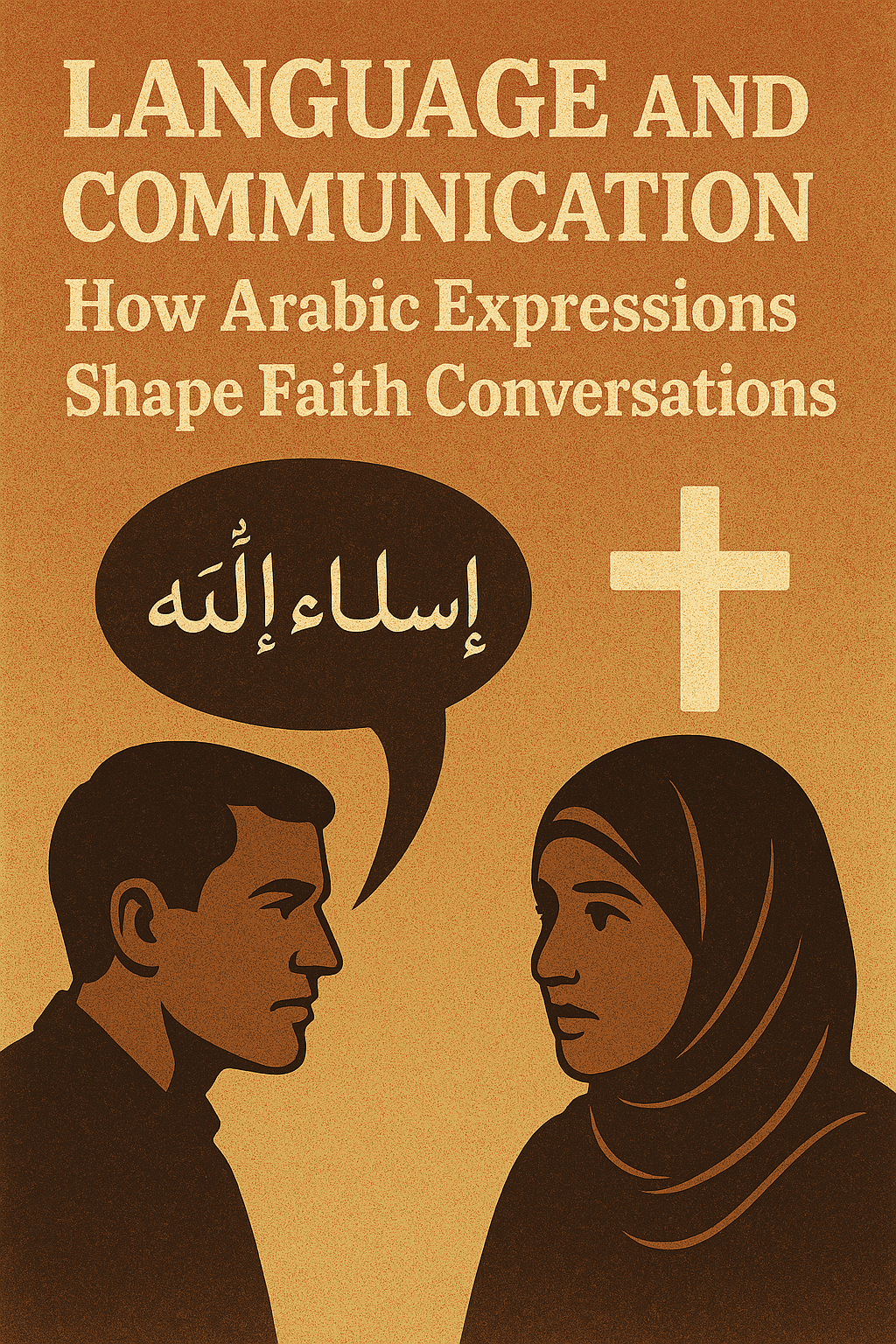
John has spent countless hours rehearsing his words in Arabic, structuring his sentences carefully, and he finally felt ready. He came up to me and began sharing what he had been memorizing. I smiled and said, “That makes sense in English, but in Arabic… it’s different.” I explained how language isn’t just about words, it’s about culture, identity, and meaning.
The Power of Arabic Expressions in Faith Conversations
Arabic is a language rich with emotion, poetry, and deep spiritual significance. The way people express ideas in Arabic often carries layers of meaning that go beyond a direct translation. If we want to effectively communicate the Gospel in the Arab world, we must understand how Arabic expressions shape conversations about faith.
1. God’s Will in Every Word – “Insha’Allah”
One of the most common phrases you’ll hear is “Insha’Allah” (إن شاء الله), meaning “if God wills.” Arabs use this for everything—from future plans to daily tasks. To a Western ear, it might seem like a passive response, but in an Islamic worldview, it reflects submission to God’s sovereignty. Understanding this expression helps us frame discussions about God’s will, predestination, and human responsibility in a way that resonates.
How to Use It: When discussing faith, don’t dismiss “Insha’Allah” as mere politeness. Engage it! Ask, “What do you think God’s will is for your life?” This can open doors to conversations about purpose, assurance, and God’s promises.
2. The Language of Honor – “May God Bless You”
Arabic speakers frequently use “Barak Allahu feek” (بارك الله فيك) or “Jazak Allahu Khayran” (جزاك الله خيرًا) to bless someone. Unlike the Western “thank you,” these phrases invoke God’s blessing, making every exchange spiritual.
How to Use It: Instead of just saying “thank you,” use an Arabic blessing. When you express gratitude with “Jazak Allahu Khayran,” you’re not only showing respect, but also speaking in a way that draws the conversation back to God.
3. The Reality of Sin – “Astaghfirullah”
The phrase “Astaghfirullah” (أستغفر الله), meaning “I seek forgiveness from God,” is used when someone hears something shocking, sinful, or even just impolite. This expression reflects an awareness of sin and the need for divine mercy.
How to Use It: When someone says “Astaghfirullah,” ask, “How do you know when you’ve been forgiven?” This can naturally lead to conversations about grace, repentance, and assurance of salvation in Christ.
4. The Heartfelt Prayer – “Allah yahdeek”
When Arabs desire God’s guidance for someone, they say “Allah yahdeek” (الله يهديك), meaning “May God guide you.” This phrase expresses a longing for spiritual truth, even when spoken casually.
How to Use It: If someone says this to you, take it as an invitation! You might respond, “Yes, I pray that God will guide me to His truth. What do you believe about God’s guidance?” This opens the door to discussing how Jesus is the way, the truth, and the life.
Speaking the Gospel in the Language of the Heart
Sharing faith in Arabic isn’t just about using the right words—it’s about understanding the culture those words reflect. When we embrace the richness of Arabic expressions, we don’t just translate our message—we transform the conversation. We speak to the heart.
By listening, learning, and using these key phrases wisely, we can communicate the Gospel in a way that truly resonates with our Arabic-speaking friends. And in doing so, we show that the message of Jesus is not foreign but deeply personal and profoundly relevant.
 The Basin and Towel