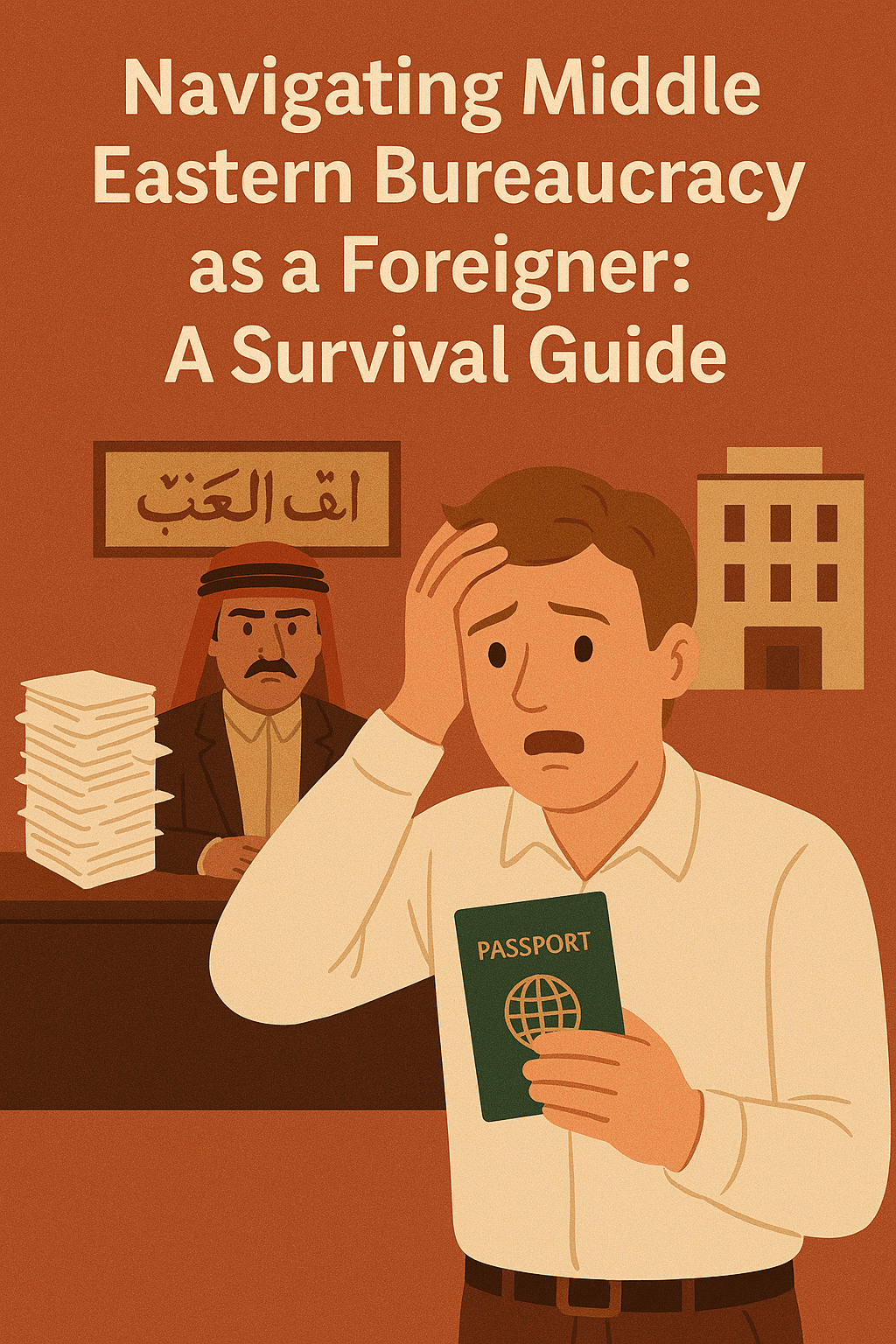
If you’ve ever found yourself staring at a stack of paperwork in a government office somewhere in the Middle East, wondering why you need six copies of the same form signed by three different people who are mysteriously “on break,” you’re not alone. Bureaucracy in the Middle East can feel like an art form—one that requires patience, persistence, and a good sense of humor.
As a Middle Eastern, I’ve seen countless foreigner struggle to learned a few key strategies that can make dealing with bureaucracy smoother (or at least less painful). Whether you’re applying for a visa, registering a business, here on a missionary journey, or just trying to get a utility bill in your name, here’s what you need to know.
1. Expect the Unexpected
Rules change. Offices relocate without notice. What worked last month might not work today. Flexibility is your greatest asset. If you go into the process expecting surprises, you’ll be far less frustrated when they inevitably happen.
2. The Power of Wasta (Connections)
In many Middle Eastern countries, “wasta” (personal connections or influence) plays a significant role in getting things done. If you know someone who knows someone, you can often cut through red tape much faster. Build relationships, be kind to officials, and don’t be afraid to ask local friends for help.
3. Bring More Than You Need
Photocopies of everything. Passport-sized photos. Extra pens. Sometimes, the person in front of you in line “forgot” something, and you can win favor by sharing. Other times, the requirements mysteriously expand, and having additional documents saves you a trip back home.
4. Patience is a Virtue (and a Necessity)
Long waits and slow processes are common. Accept it. Bring a book, a charged phone, and maybe even some snacks. The calmer you remain, the more likely officials will be to help you rather than ignore you.
5. Dress and Behave Respectfully
First impressions matter. Dressing neatly and treating staff with respect can go a long way. Many government workers deal with frustrated applicants all day—being polite and friendly can set you apart and sometimes even speed things up.
6. Learn Key Phrases in Arabic
Even if you’re in a country where many officials speak English, a few Arabic phrases can work wonders. A simple “Shukran” (thank you) or “Mumkin musa’ada?” (Can you help me?) can make interactions smoother.
7. Keep Records and Follow Up
Don’t assume that because you submitted paperwork, it will be processed. Check back regularly. Keep receipts, reference numbers, and even names of the people who helped you. If something gets “lost,” having proof can speed up the resolution process.
8. Smile and Stay Positive
Frustration is easy, but a smile can work wonders. A positive attitude can make your experience (and the officials’ experience) much more pleasant. A little humor can also break the ice and turn a rigid process into a smoother one.
9. Find a Local Insider
Every office has an “insider”—a fixer, an unofficial guide, or even a helpful janitor who knows how things really work. Befriend them. They can provide invaluable advice, tell you when the right people are available, and sometimes even help move things along.
10. Celebrate Small Wins
When you finally get that visa stamp, work permit, or driver’s license, take a moment to celebrate. Surviving Middle Eastern bureaucracy is no small feat, and every success is worth appreciating.
Final Thoughts
Dealing with bureaucracy in the Middle East can be frustrating, but it’s also a crash course in patience, relationship-building, and adaptability. If you approach it with the right mindset, it becomes less of a nightmare and more of an adventure—one that, in time, you might even learn to navigate like a local.
 The Basin and Towel