
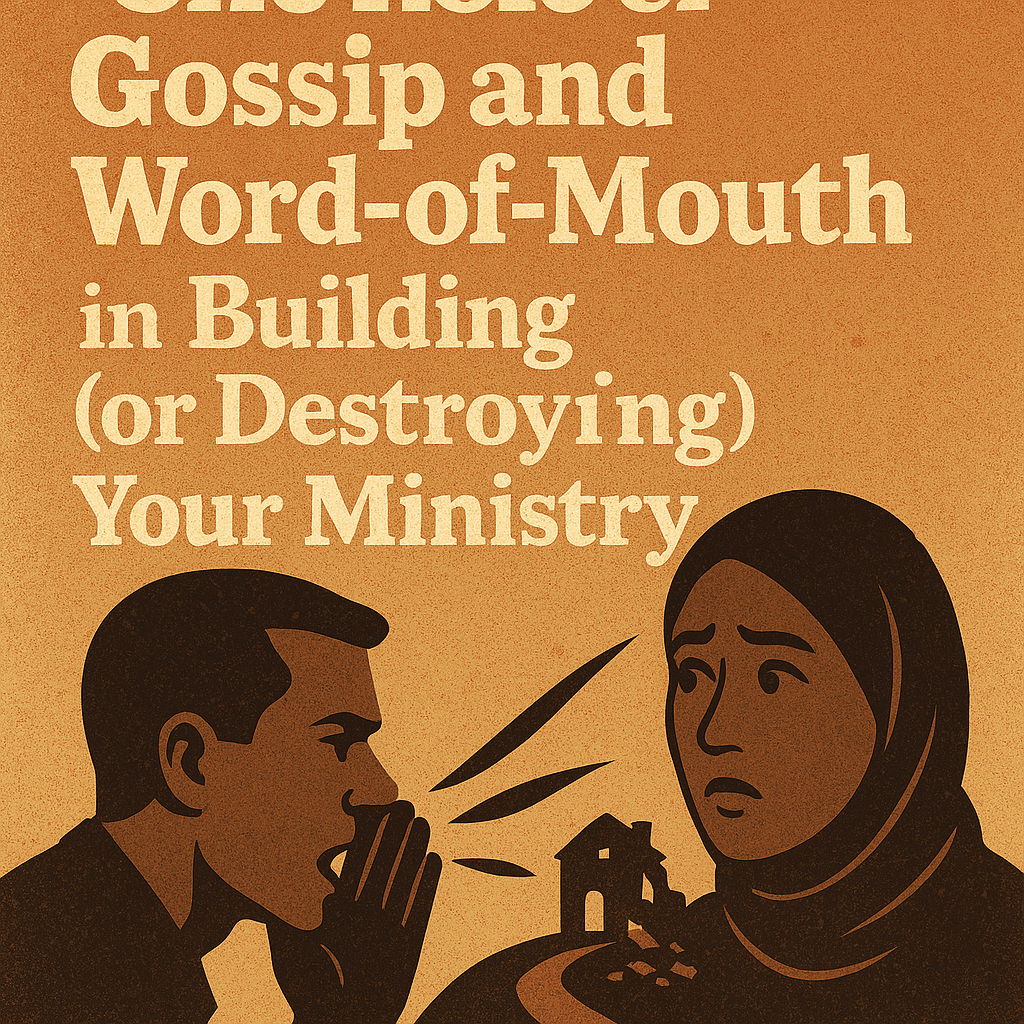
I’ll never forget when I first arrived to a small refugee camp to serve in ministry. Before I had even met half the people in the community, they already had strong opinions about me. I have worked with some of them before, but this was my first time visting them. Some saw me as a blessing, while others whispered doubts behind my back. The irony? Most of their perceptions weren’t based on personal interactions but on stories passed around like fresh bread at a family meal. This is the power of word-of-mouth—and it can either build or break your ministry.
The Power of the Tongue in Middle Eastern Culture
In the Middle East, where hospitality reigns and conversations linger over cups of strong tea, words are everything. Reputation spreads faster than wildfire, and what people say about you—true or not—carries weight. If someone vouches for you, doors open effortlessly. But if gossip turns against you, no strategy or theological argument can repair the damage quickly.
Westerners often view communication as transactional: words convey facts. But in the Middle East, communication is relational: words shape identity, influence trust, and create community. What is spoken about you in the market, in homes, and in casual conversations can either amplify your ministry or suffocate it before it even begins.
Gossip: The Silent Ministry Killer
Gossip is not just a “bad habit” in ministry—it’s a silent killer. I’ve seen good ministries crumble, not because of theological disagreements or lack of strategy, but because of unchecked rumors.
It starts small: “Did you hear why they really came here?” or “I don’t think they understand our culture.” Before you know it, a few seeds of doubt grow into a narrative of distrust. And in a culture where trust is everything, recovering from a negative reputation is like trying to unboil an egg.
Harnessing Word-of-Mouth for Good
While gossip can destroy, word-of-mouth can also build. In the Middle East, personal recommendations carry more influence than social media campaigns or official endorsements. Here’s how you can use word-of-mouth to strengthen your ministry:
- Be Present in the Community – Relationships are built face-to-face. Spend time drinking tea with people, visiting their homes, and engaging in local life. The more people see your heart, the less room there is for speculation.
- Let Your Actions Speak Louder than Words – Integrity and kindness will always outlast gossip. Be the person who consistently shows up, serves, and loves. Over time, the right stories will spread.
- Win Over the Influencers – Every community has key voices—whether it’s the elder at the mosque, the local shopkeeper, or the respected grandmother. If they speak well of you, your reputation will grow in ways no amount of self-promotion can achieve.
- Address Misunderstandings Early – If you catch wind of false stories, don’t ignore them. Lovingly and humbly clarify when necessary. A simple, “I heard there was some confusion about this, and I wanted to make sure you heard it from me,” can go a long way.
- Pray for Protection – The enemy loves to use division and deception. Pray for God to guard your name and allow truth to be louder than lies.
The Lasting Legacy of Your Words
Proverbs 18:21 says, “The tongue has the power of life and death.” Nowhere is this more evident than in ministry. Whether in the Middle East or the West, what people say can either pave the way for God’s work or become a stumbling block.
The good news? The same power that can tear down can also build up. If we are intentional about cultivating trust, speaking life, and engaging in real relationships, then word-of-mouth will become one of the greatest tools for advancing the Kingdom.
In the end, the stories people tell about you will shape your legacy. So, let’s make sure they are stories worth telling.
 The Basin and Towel