
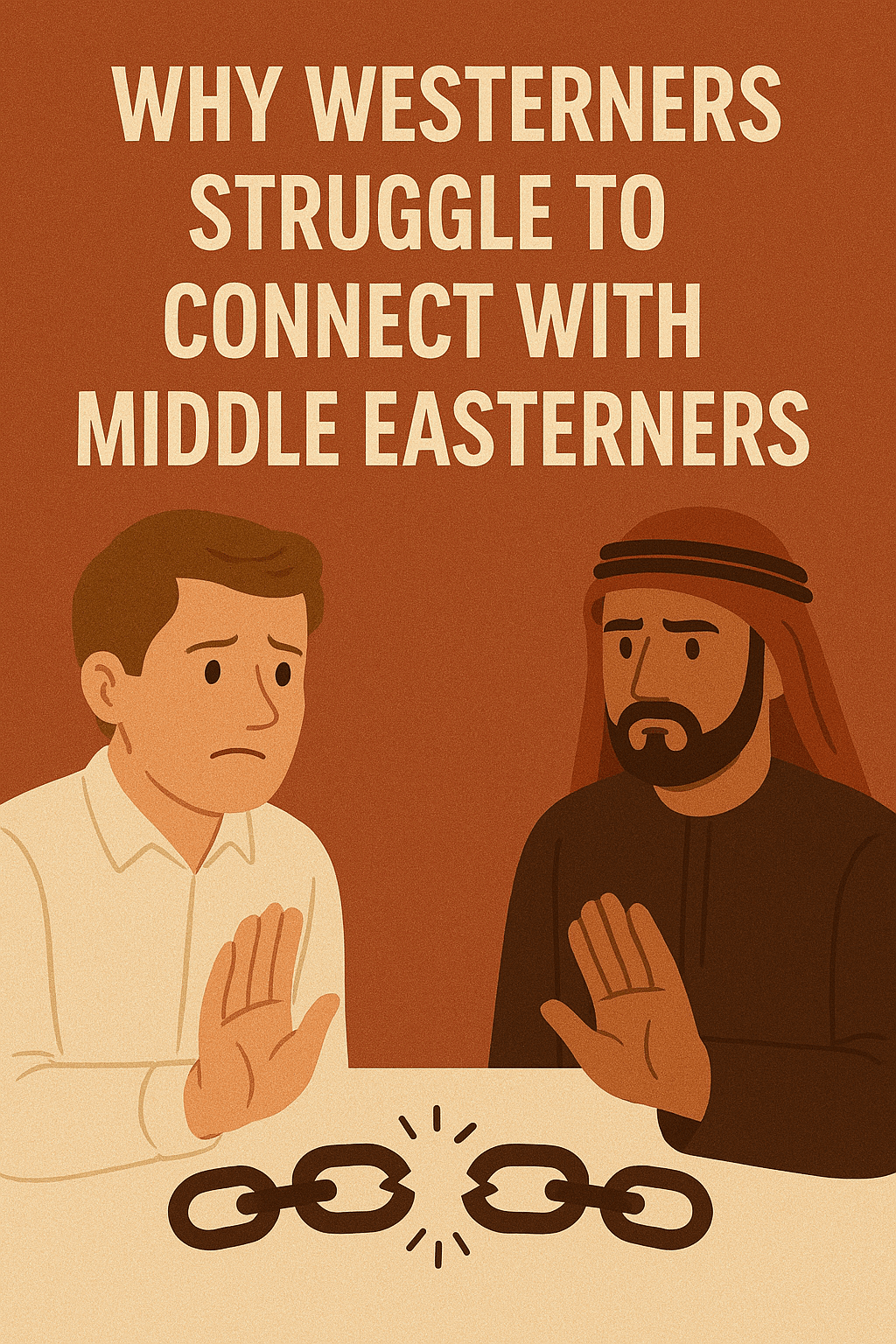
I remember sitting across from my Middle Eastern friend in a small coffee shop. We had been talking for weeks, but something still felt off. He was warm, welcoming, and full of stories, yet there was a distance between us. It wasn’t until I stopped trying to “get to the point” and simply sat with him—listening, engaging, and embracing his way of communication—that I finally felt a connection. That’s when I realized: Westerners often struggle to connect with Middle Easterners not because of hostility or lack of interest, but because of deep cultural differences in how relationships are built.
1. Different Views on Time and Conversations
In the West, efficiency is highly valued. Conversations tend to be direct, with a clear beginning and end. People “catch up” over coffee in 30 minutes and then move on with their day. But in the Middle East, relationships take time. Conversations are long, unhurried, and full of detours. It’s not about reaching a conclusion; it’s about the connection itself. Rushing a conversation or trying to “get to the point” can make Middle Easterners feel that the relationship is transactional rather than genuine.
2. Community vs. Individualism
Western cultures prioritize individualism—personal goals, independence, and self-expression. In contrast, Middle Eastern societies are communal. Decisions are made with family and group harmony in mind. This difference can create misunderstandings when Westerners assume that personal choice is the highest value, while Middle Easterners prioritize family expectations and social cohesion.
3. Hospitality and Honor
Middle Eastern hospitality is legendary. Guests are treated with the highest honor, often in ways that may seem excessive to Westerners. Turning down a cup of tea or declining an offer of food can unintentionally signal rejection. In the West, saying “No, thank you” is seen as polite and acceptable, but in Middle Eastern culture, it can be perceived as refusing friendship. Understanding that hospitality is a form of love and respect can help bridge this gap.
4. The Role of Faith and Tradition
For many in the Middle East, faith and tradition are deeply woven into everyday life. Islam, Christianity, and other faiths play a central role in identity and social interactions. Western secularism, on the other hand, often separates faith from public life. This disconnect can make Westerners hesitant to discuss religious topics, fearing offense, while Middle Easterners may feel that avoiding faith-based conversations is a sign of disinterest in their lives.
5. Expressing Emotion Differently
Middle Eastern communication is often more expressive—both in speech and body language. Conversations can seem loud, passionate, and even confrontational to Westerners, who tend to value calm and measured discussions. What may feel like an argument to a Westerner is often just an animated conversation between friends.
How to Bridge the Gap
So, what can Westerners do to connect better with Middle Easterners? Here are a few practical steps:
- Slow down. Take time to talk, listen, and enjoy the process without rushing.
- Embrace hospitality. Accept food and invitations warmly—it’s a sign of relationship.
- Respect communal values. Understand that family and group dynamics matter deeply.
- Be open to faith conversations. Ask questions with genuine curiosity.
- Adapt to expressive communication. Don’t mistake passion for conflict.
Final Thoughts
Cross-cultural connection isn’t about changing who you are; it’s about understanding and adapting. When Westerners take the time to learn and embrace Middle Eastern ways of relationship-building, they discover something beautiful: deep, lasting friendships built on genuine care and shared experiences. And in the end, isn’t that what we all long for?
 The Basin and Towel