
When David was invited to dinner at his friend Kareem’s house, he thought it would be a simple meal and conversation. But when he arrived, he was overwhelmed. A massive spread of food covered the table—piles of rice, lamb, fresh bread, and more dishes than he could count. Kareem’s family hovered around him, refilling his plate the second he took a bite. When he finally put his fork down, Kareem’s father laughed and said, “You must eat more, my friend!”
David was full, but he didn’t want to offend anyone. He forced himself to take another bite. Then another. The night stretched on with endless rounds of tea, desserts, and conversation. When David finally left, he realized hospitality in the Middle East wasn’t just about food—it was an art, a way of life, and a deep expression of honor and relationship.
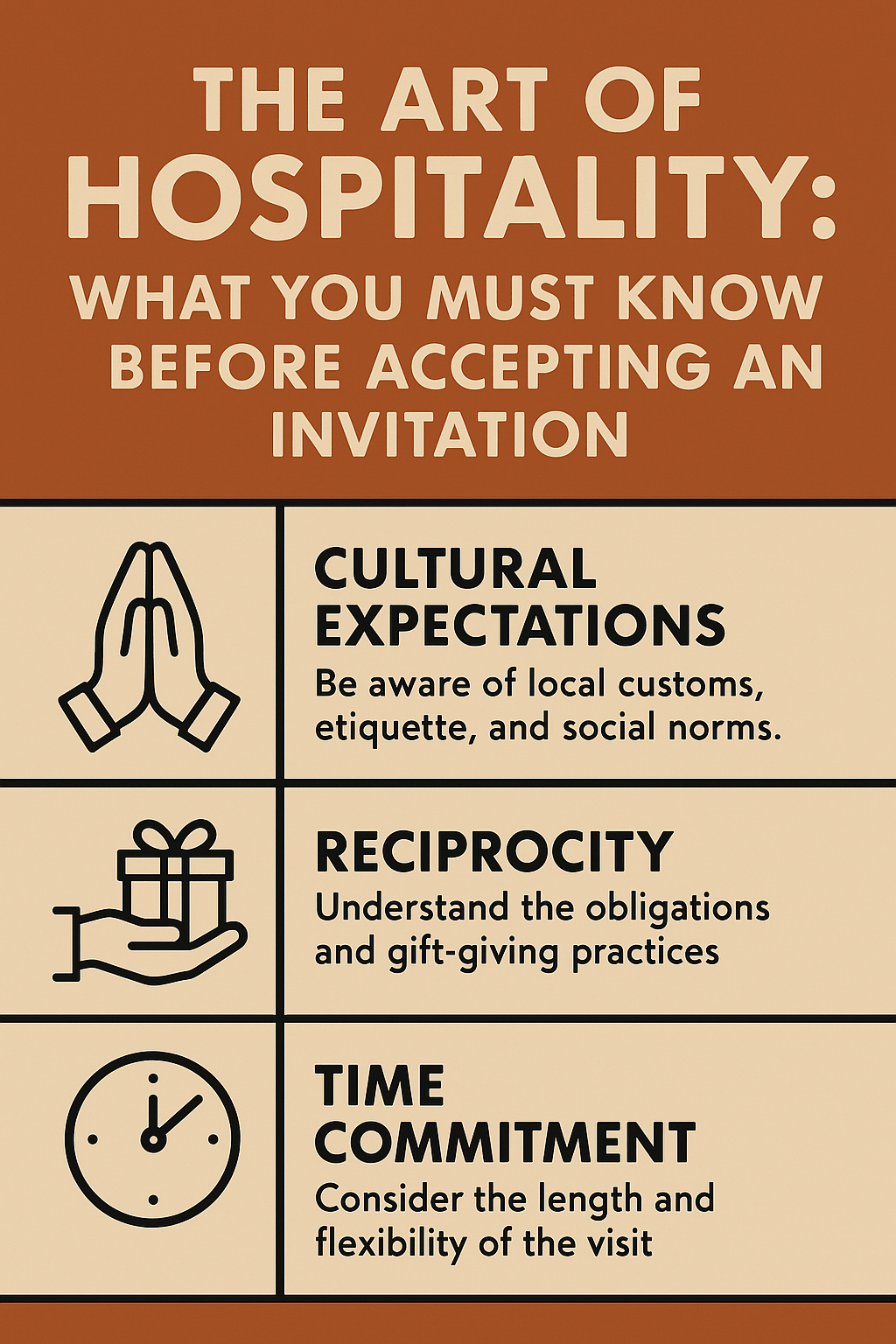
If you’ve ever been invited into a Middle Eastern home, there are things you must know before stepping through the door. Hospitality here is rich, complex, and full of meaning. Understanding it will not only save you from awkward moments but also help you build deep, lasting relationships.
1. Saying “No” to an Invitation is Rude (Even If You’re Busy)
In Western culture, declining an invitation is normal—”Sorry, I can’t make it” is often understood without offense. But in the Middle East, rejecting hospitality is like rejecting the person. Even if you’re truly busy, a direct “no” can feel dismissive.
What You Should Do:
Instead of saying “I can’t come,” say, “I would love to, but I have another commitment. Can we meet another time?” This shows appreciation while leaving the door open for the future.
2. Arrive Late (But Not Too Late!)
Westerners value punctuality. If dinner is at 7:00 PM, you arrive at 7:00 PM. But in the Middle East, arriving exactly on time can actually put your host in an awkward position—they may still be preparing.
What You Should Do:
The sweet spot? Arrive about 15-30 minutes late. This gives your host time to finalize preparations but isn’t so late that it seems disrespectful.
3. Greet Everyone—Not Just the Host
Westerners often enter a home and go straight to the host. But in the Middle East, ignoring the other family members—even unintentionally—can seem rude.
What You Should Do:
Upon entering, greet everyone warmly, shaking hands or even giving a light embrace if appropriate. If there are elders, acknowledge them first—they hold a place of honor.
4. Expect to Eat… A LOT
Middle Eastern hospitality revolves around food. Saying you’re “not hungry” is not an option. Your plate will be full, and the moment you clear it, someone will add more.
What You Should Do:
- Pace yourself! Eat slowly, or you’ll find yourself stuffed within minutes.
- Leave a little food on your plate at the end—if you finish everything, it signals you want more!
- Compliment the food generously—this honors the host.
5. Never Refuse Tea or Coffee
After the meal, there will be tea or coffee—usually strong, sweet, and served in small cups. This isn’t just a drink; it’s a ritual, a moment of deep connection. Refusing is seen as cold or dismissive.
What You Should Do:
Even if you don’t drink caffeine, take at least one sip to show respect. If you don’t want more, gently shake your cup side to side when the host comes to refill it—this is the polite way to say “no more, thank you.”
6. Don’t Rush to Leave
In the West, meals have a clear structure—eat, chat, leave. But in the Middle East, leaving too soon can signal disinterest or even insult your host. Hospitality is about more than food—it’s about time spent together.
What You Should Do:
Even if you’re tired, stay a little longer, enjoy the conversation, and wait for a natural moment to leave. If the host insists you stay longer (which they likely will), politely express gratitude but say you must go soon.
7. Gifts? Yes, But Be Thoughtful
Bringing a gift isn’t required, but it’s always appreciated. However, some gifts can be offensive—especially alcohol (unless you know they drink) or anything overly personal.
What You Should Do:
A safe choice? Bring sweets, fruits, or a small decorative item. If there are children, bringing something for them—like chocolates—instantly wins favor with the family.
8. Be Ready for Deep Conversations
In the West, small talk is normal. But in the Middle East, conversations quickly turn personal—faith, family, politics. Westerners sometimes avoid these topics, but here, avoiding them can feel distant or insincere.
What You Should Do:
Be open, not defensive. If someone asks about your beliefs, don’t panic—see it as an opportunity for connection rather than debate. Ask them about their faith too; this shows respect and builds trust.
9. Always, Always Express Gratitude
Hospitality is sacred in the Middle East. Your hosts have spent hours preparing for you. Leaving without proper thanks can feel dismissive.
What You Should Do:
- Verbally express how honored you feel. Say something like “Your hospitality was incredible. I feel like family.”
- Follow up the next day with a message or call, reaffirming your gratitude.
Final Thought: Hospitality is a Doorway to the Gospel
In the Middle East, hospitality isn’t just about food—it’s about relationship, honor, and trust. If you navigate it well, you’ll find open doors for meaningful conversations, deep friendships, and opportunities to share Christ.
Respect the culture, engage with warmth, and let hospitality become a bridge—not just to people’s homes, but to their hearts.
Have you ever experienced Middle Eastern hospitality? What surprised you the most? Share your thoughts below!
 The Basin and Towel