
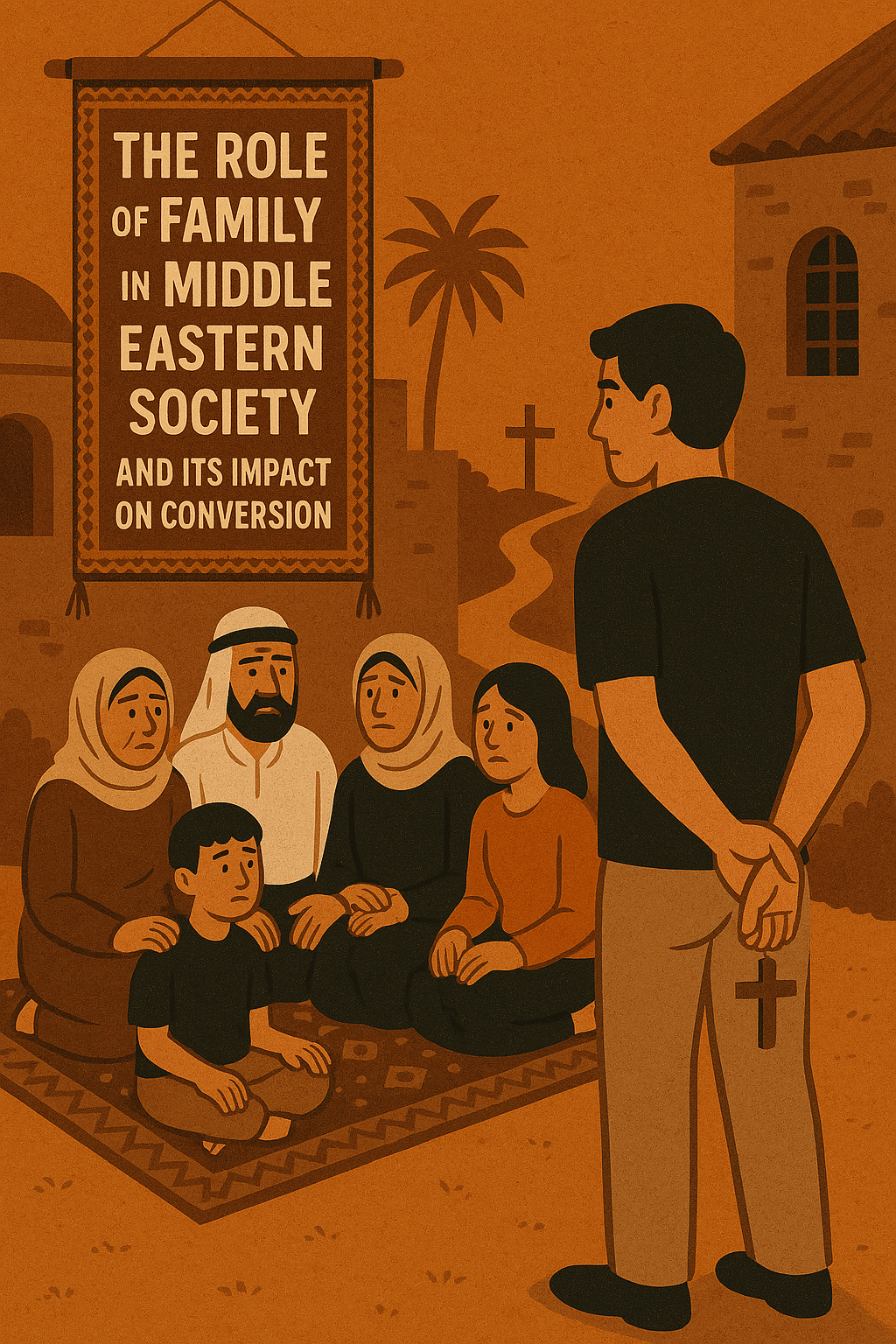
In the West, faith is often viewed as an individual choice—something deeply personal and private. But in the Middle East, faith is not just personal; it is communal, woven into the fabric of family and societal identity. Understanding this dynamic is crucial for anyone engaging in missions or ministry among Muslims, as conversion in this context carries profound relational implications.
Family: The Cornerstone of Middle Eastern Society
Family in the Middle East is more than just a support system—it is the core of a person’s identity, security, and social standing. Unlike Western cultures, where independence is often celebrated, Middle Eastern cultures emphasize collectivism. Decisions, including matters of faith, are rarely made in isolation. One’s beliefs reflect not just personal convictions but also family loyalty and honor.
This strong family dynamic means that conversion to Christianity is not simply a personal spiritual decision; it is seen as an act that affects the entire family. It can be perceived as betrayal, bringing shame upon the household. This is why many Muslim-background believers (MBBs) face intense opposition when they choose to follow Christ.
The Weight of Honor and Shame
In Middle Eastern culture, honor and shame shape nearly every aspect of life. A person’s actions either uphold or tarnish the reputation of their family. When someone converts to Christianity, the family may react with anything from disappointment to severe persecution. This is because conversion is seen as rejecting not only Islam but also the family’s heritage, honor, and communal identity.
For some, the repercussions of conversion can be devastating: social ostracization, job loss, or even physical threats. This is why many new believers keep their faith a secret, sometimes for years, as they seek wisdom on how to share Christ without bringing harm to themselves or their loved ones.
Conversion as a Family Journey
While individual conversions are often met with resistance, history has shown that when entire families come to Christ together, the opposition is significantly reduced. In some cases, family-based movements to Christ (also known as household salvations) have led to entire clans embracing the gospel. This approach aligns with the biblical model seen in Acts 16:31: “Believe in the Lord Jesus, and you will be saved—you and your household.”
Missionaries and church planters in the Middle East have found that emphasizing the communal aspects of Christianity—such as the concept of the church as the family of God—can be effective in bridging the gap. When people see the church not as an institution but as a family, it resonates deeply with Middle Eastern values.
Strategies for Ministering in a Family-Centered Culture
For those engaging in ministry among Muslims, here are a few key principles to keep in mind:
- Build relationships first. Trust is everything in Middle Eastern culture. Before sharing the gospel, invest time in genuine friendship and hospitality.
- Honor the family. Show respect for their traditions and relationships. Whenever possible, involve family members in conversations rather than isolating individuals.
- Emphasize the communal nature of Christianity. Frame the gospel in terms of family, belonging, and honor in Christ rather than just individual salvation.
- Pray for whole families to come to faith. Seek God for household salvations, as these are more likely to be sustainable and face less opposition.
- Help new believers navigate family dynamics wisely. Encourage them to be patient and discerning as they share their faith, avoiding unnecessary conflict while remaining faithful to Christ.
A Call to Love and Perseverance
The gospel is powerful, even in the most challenging cultural contexts. While family dynamics can make conversion difficult in the Middle East, they can also become the very vehicle through which entire communities are transformed by Christ. For those engaging in missions, the key is patience, wisdom, and a deep love for the people they serve.
The church must be ready to stand with those who risk everything to follow Jesus, offering them the support of a spiritual family that is stronger than the fear of shame. As we pray and labor for the Middle East, may we remember that God is not just calling individuals—He is calling families, tribes, and nations to Himself.
 The Basin and Towel