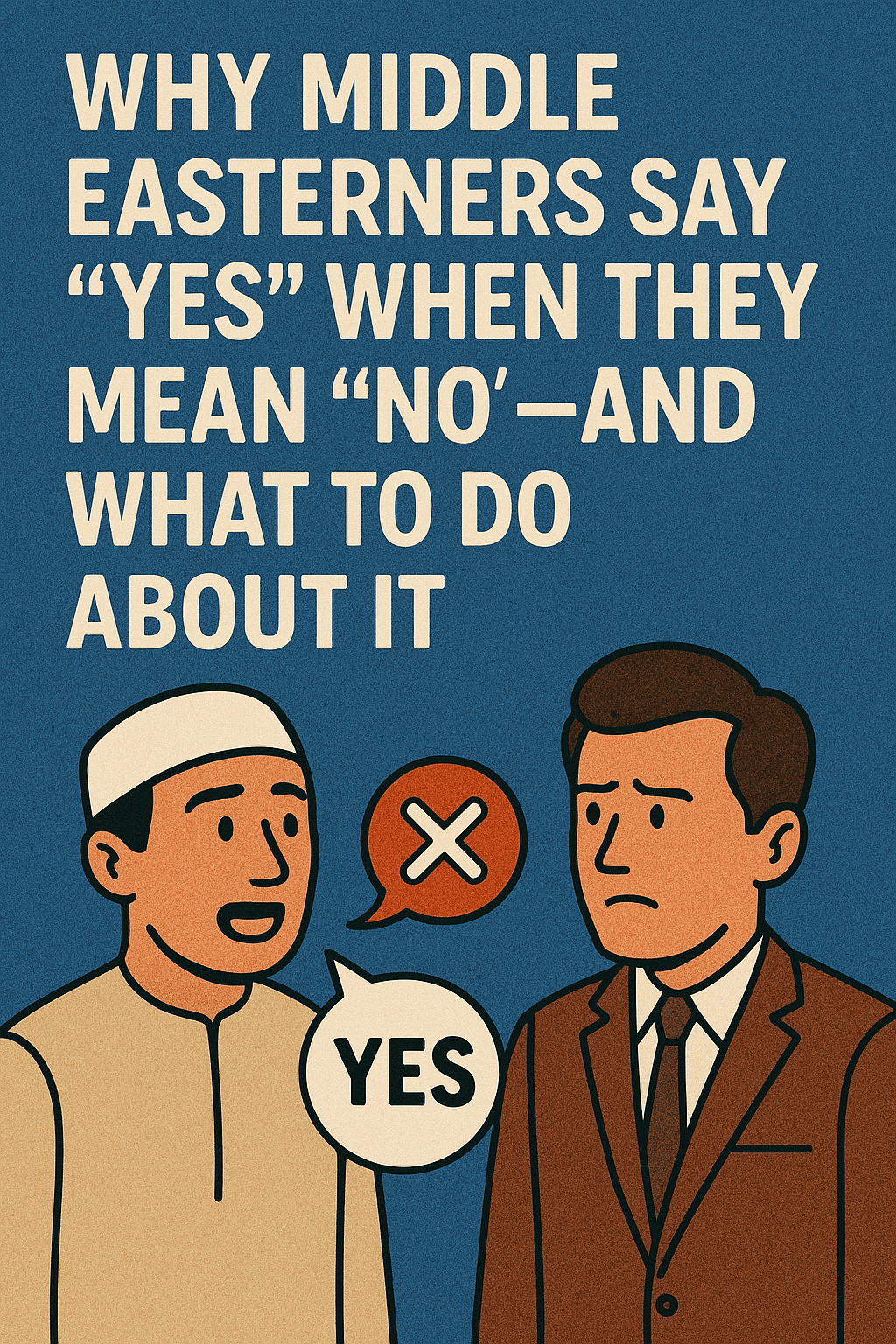
When John arrived in the Middle East, he was excited to build relationships. One day, he invited his friend Omar to a Discovery based Bible study. Omar smiled warmly and said, “Yes, of course! I would love to come.”
John was thrilled. But when the day came, Omar never showed up. Confused, John asked him later if everything was okay. Again, Omar smiled and said, “Yes, yes, next time, Inshallah (God willing)!”
But next time never came.
Westerners often find this frustrating—why say “yes” when you don’t mean it? Why not just say “no” and be honest? But in the Middle East, things don’t work that way. If you want to be effective in ministry here, you need to understand why Middle Easterners communicate like this and how to navigate it.
1. “Yes” is About Honor, Not Commitment
In Middle Eastern culture, relationships matter more than efficiency. Keeping harmony and avoiding offense is more important than giving a blunt “no.”
A direct rejection—especially in person—can embarrass someone or damage a relationship. So, instead of saying “no,” people say “yes” to be polite and to honor the relationship, even if they have no intention of following through.
What You Should Do:
Don’t assume a “yes” means actual commitment. Look for other clues—body language, hesitation, or the phrase “Inshallah” (which can mean “if God wills” but often signals uncertainty). If you’re unsure, give them an easy way to decline:
Instead of “Will you come to the Bible study?” try “I know you’re busy—do you think you’ll be able to make it?”
2. “No” is Often Indirect
In the West, people value directness—saying exactly what they mean. In the Middle East, saying “no” outright can seem harsh, even rude. So instead, people decline indirectly.
For example, if you invite someone for dinner and they say:
- “Inshallah” (without enthusiasm)
- “Let me check my schedule”
- “Maybe, I’ll see”
- “God bless you, that’s very kind of you”
…there’s a good chance they mean “no,” but they don’t want to hurt your feelings.
What You Should Do:
Pay attention to tone and nonverbal signals. If someone repeatedly avoids committing, take the hint. You can also make it easier for them to say “no” by offering a way out:
Instead of “Can you help with the outreach tomorrow?” try “If you’re busy, I totally understand, but if you’re free, we’d love to have you.”
3. Hospitality Creates Pressure to Say “Yes”
Hospitality is sacred in the Middle East. If you invite someone to your house or to a church event, they might say “yes” simply because refusing an invitation feels disrespectful.
But saying “yes” doesn’t always mean they’re actually interested—it might just be their way of showing respect. They may feel guilty about saying “no” to a guest or friend, so they say “yes” even if they won’t come.
What You Should Do:
Recognize that enthusiasm matters more than words. If someone genuinely wants to come, they’ll ask for details, set a time, or even follow up with you. If they just say “yes” without showing interest, don’t push them.
4. Commitments Depend on Family and Community
In Western culture, individuals make their own decisions. But in the Middle East, a person’s commitments are tied to their family, tribe, or community.
Ahmed might want to come to your church gathering, but if his father or uncle disapproves, he can’t just say “no”—that would be admitting that he lacks freedom. Instead, he’ll give you a polite “yes” and then simply not show up.
What You Should Do:
Instead of asking individuals to commit alone, try involving their families. Build relationships with their relatives first. A community-oriented approach often leads to deeper, more lasting connections.
5. What “Yes” Actually Means (A Quick Guide)
Since “yes” can mean different things in the Middle East, here’s a guide to interpreting responses:
| What They Say | What They Probably Mean |
| “Yes, of course!” (Excited, asks for details) | Likely a real “yes” |
| “Inshallah” (Casually, without enthusiasm) | Probably a “no” |
| “Yes, yes, we will see” | Likely a polite “no” |
| “That sounds good, let’s talk later” | Not a commitment |
| “God bless you, very kind of you” | Respectful way to decline |
Westerners often get frustrated with this indirect communication style. “Why can’t people just be honest?” they ask. But honesty looks different in the Middle East—preserving relationships is more important than bluntness.
Instead of expecting direct answers, learn to listen between the lines. Look for enthusiasm, pay attention to tone, and always give people an easy way to decline without embarrassment.
If you do this, you won’t just avoid frustration—you’ll build deeper, more trusting relationships where real conversations about Jesus can flourish.
What’s been your experience with indirect communication in other cultures? Share your thoughts below!
 The Basin and Towel