
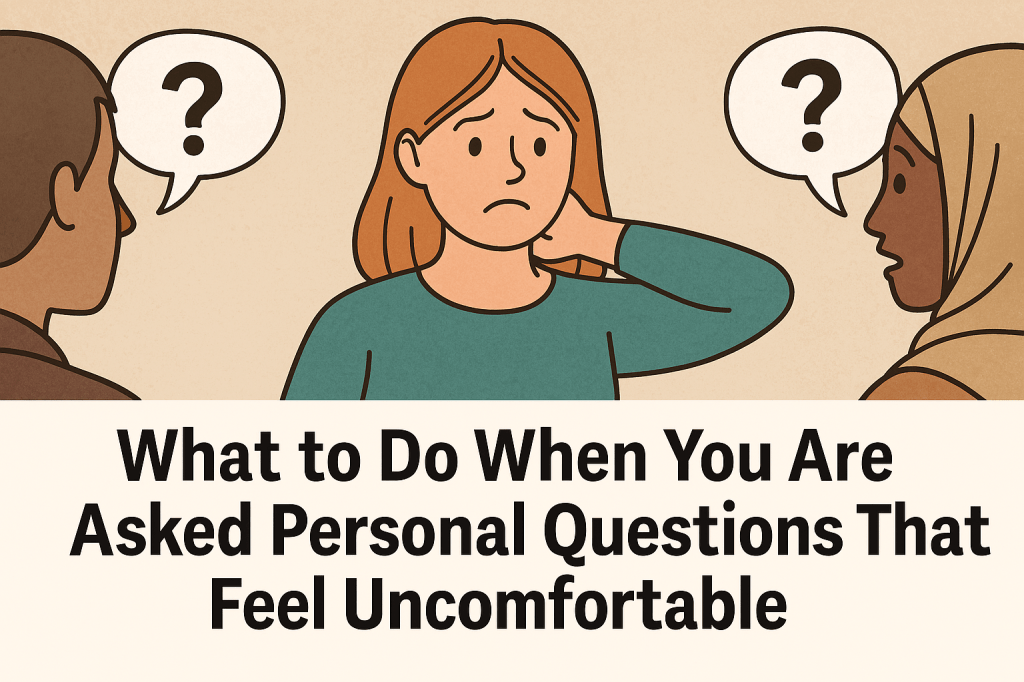
Several years ago, my car broke down and I had to take a taxi home. I was crammed into the backseat of a beat-up taxi in the middle of the summer. The hot wind whipping through the open windows as we sped through chaotic streets. The driver turned to me and asked, “Are you married?”, “Do you have kids”? “When are you planning on getting pregnant?”, “Does your wife work”?
It wasn’t the first time I had been asked these sort of questions, and it certainly wouldn’t be the last. In Middle Eastern culture, personal questions are fair game—even with strangers. Family, work, and even your personal life are common conversation starters. But as a Western missionary, it can feel intrusive and uncomfortable. How much should you say? What is really being asked? And how can you respond in a way that is both culturally appropriate and personally wise?
Maybe you’ve been there too. Whether it’s a well-meaning local friend, a curious shopkeeper, or even a stranger at a café, you’ll likely be asked questions that feel too personal. Here’s how to handle these situations with grace, wisdom, and cultural understanding.
1. Understand the Intent Behind the Question
Not all personal questions are meant to pry or offend. In the Middle East, asking about family, income, or even weight is simply a way of connecting. Before reacting defensively, pause and consider: Is this question coming from genuine hospitality or cultural norms? More often than not, it’s an attempt to build a relational bridge rather than to pry.
2. Decide Your Comfort Level in Advance
One of the best ways to avoid feeling caught off guard is to decide ahead of time what you are comfortable sharing. If you anticipate certain questions—about your relationship status, salary, or future plans—mentally prepare a response that aligns with your personal boundaries while still being respectful.
For example:
- If someone asks, “Why aren’t you married yet?” you might respond, “In my culture, we often wait for God’s leading in marriage.”
- If you’re asked about income, a good answer might be, “I have enough to live comfortably, and I’m grateful.”
- If someone pries about health or weight, a gentle, “I’m thankful for the life God has given me,” sets a clear but respectful boundary.
3. Use Humor to Deflect
Humor is a universal tool for easing tension. If someone asks, “How much money do you make?” you can chuckle and say, “Enough to afford good tea and strong coffee!” This approach keeps the conversation light and shifts the focus away from an intrusive question.
4. Redirect the Conversation
An easy way to handle an uncomfortable question is to turn it back on the other person. If someone asks, “Why don’t you have kids yet?” you can respond with, “That’s an interesting question! Tell me about your family.” This shows interest in their life while steering the conversation away from personal topics.
5. Set Firm Boundaries When Necessary
There are times when a direct response is needed. If a question crosses the line, it’s okay to say, “I prefer to keep that private.” You don’t owe anyone personal details about your life, and a simple, confident statement can shut down further inquiries while maintaining respect.
6. Be Culturally Sensitive, But Stay True to Yourself
In the Middle East, hospitality and relationship-building are deeply valued. Sometimes, answering a personal question in a way that fosters connection is more important than maintaining rigid Western privacy standards. Find ways to respond that honor both the local culture and your personal boundaries.
7. Trust Your Gut
If a question feels uncomfortable because it seems manipulative or inappropriate, listen to that inner warning. Not every question deserves an answer. It’s okay to politely disengage or change the subject.
Final Thoughts: Confidence in Every Conversation
Back in that taxi, I smiled and answered the driver, “Not yet! I’m waiting for the right person.” He nodded and grinned, satisfied with my answer. No awkwardness. No tension. Just a moment of connection.
As a Western missionary in the Middle East, you will face personal questions that might feel invasive. But with the right mindset and tools, you can navigate them with grace and confidence. Decide your boundaries ahead of time, use humor and redirection when needed, and don’t be afraid to say, “I’d rather not talk about that.” You have the power to navigate these moments in a way that fosters respect, builds relationships, and honors God.
What’s a personal question you’ve been asked that caught you off guard? How did you handle it?
 The Basin and Towel