
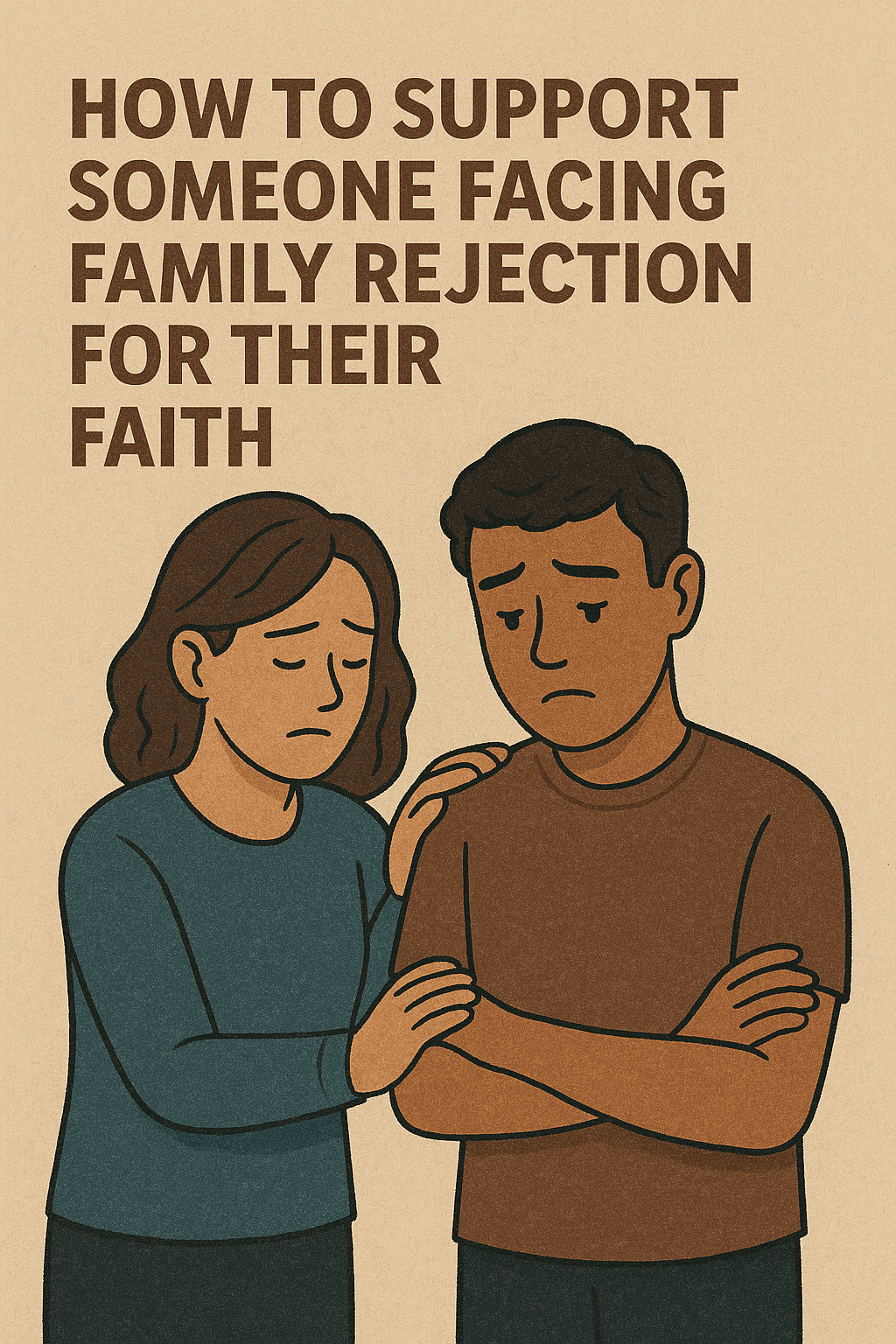
“You are no longer my son.”
Those five words are sharper than a sword. They’re not metaphorical. They’re real — I’ve heard them more times than I can count. They echo across our region when someone turns to follow Jesus. And in our world, where family is not just important but everything, rejection is identity-shattering.
In the West, faith often feels like a personal journey. Here, it is communal, embodied, and tied to family, tribe, and honor. To follow Christ is, in the eyes of one’s kin, to betray the blood that raised you. So when you ask, “How can I support someone facing family rejection for their faith?”, let me offer you insight born of dust, tears, and gospel fire.
Youssef’s Silence
Youssef was 17 when he met Jesus through a late-night YouTube video about the cross. He didn’t tell anyone for months. When he finally confessed to his mother, she screamed. His father beat him. His uncles threatened worse. Then came the silence, the deep cultural punishment of being invisible.
In Arab culture, to be ignored by your family is not apathy. It is a calculated exile. Meals continue without you. Your name is removed from introductions. You are alive, but erased.
But here’s what saved Youssef from spiritual collapse: a small, faithful community who refused to let him walk alone.
5 Ways You Can Truly Support
1. Don’t Treat the Rejection as an Interruption — It Is the Discipleship
This isn’t a crisis to solve. It’s the cross being carried. Too many Western friends rush to “fix” it — housing, scholarships, relocation. Sometimes that’s needed. Often, it’s not. What’s needed is presence, not escape.
Be like John at the cross — there, in the pain, not trying to pull Jesus down from it.
2. Honor Their Family Even When Their Family Doesn’t
Never speak ill of their parents, even if they curse them. Family is sacred in our culture. Even a betrayed son still bears the imprint of his father’s hands. Honor doesn’t mean agreement — it means restraint, respect, and prayer.
I once heard a believer say, “My father broke me. But still I fast for him.”
3. Be a New Household, Not Just a Friend
Western individualism struggles to understand this, but when someone loses their family here, they’re not just losing support — they’re losing their place in the world. Be their “place.” Eat together regularly. Celebrate their birthday. Remember their name day. Text like a brother. Hug like a mother. Let them feel that they belong somewhere.
Don’t just mentor — adopt.
4. Speak the Promise of Jesus Loudly and Often
When you lose everything for Jesus, you need to hear His promises constantly. Remind them, word for word, of what the Scriptures say:
“Truly I tell you… no one who has left home or brothers or sisters or mother or father… for Me and the gospel will fail to receive a hundred times as much…” (Mark 10:29–30)
Print it. Tattoo it on your conversations. Frame it on their wall.
5. Equip Them for the Long Game
Family rejection often isn’t final — it just feels like it. Years later, I’ve seen fathers ask for forgiveness. I’ve seen mothers ask for prayer. But this journey takes grit, Scripture, and deep spiritual formation.
Help them learn the art of suffering well. Teach them how to pray like Job and forgive like Joseph. Get them into Scripture with a Middle Eastern lens — not just theology, but survival.
A Word to Western Believers
When you walk with someone through family rejection in the Middle East, you are standing on sacred ground. You’re watching someone die to themselves in real time. It is slow martyrdom. It’s not always bloody, but it is always holy.
Don’t make it about you. Don’t assume you understand. Just show up. Stay. Bless. Hold space. Pray without cliché.
Because when the family turns away, the body of Christ must become the family.
 The Basin and Towel