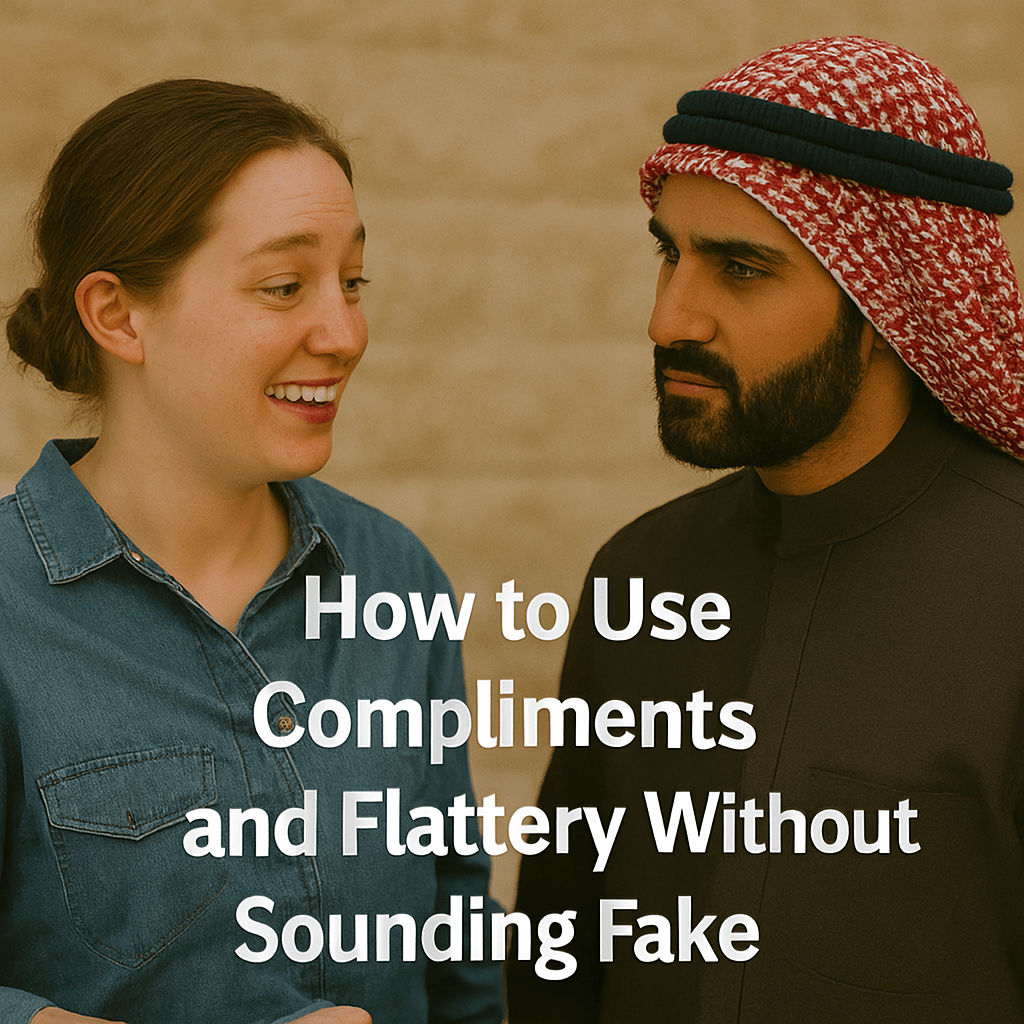
Robert visited the Bedouin side to check on one of our ministries there. After our short trip, we decided to stop at a small market in Amman, Jordan. Robert walked in and confidently said, “I love your store.” The shopkeeper smiled politely but didn’t seem particularly moved. My friend looked at me, confused.
“You have to say it differently,” I whispered. I turned to the shopkeeper and said, “Your store is a masterpiece! You have a gift for creating a beautiful atmosphere.” Suddenly, the man’s face lit up. “Ahlan wa sahlan! You honor me with your words.” He ushered us in, poured tea, and treated us like royalty.
This moment taught my friend a valuable lesson: compliments and flattery, when used correctly, can open doors, build relationships, and even transform interactions. But when done poorly, they can feel empty, forced, or worse—dishonest.
Another example of this comes straight from social media. A man decided to clean a stranger’s backyard and mow the lawn for free. After spending hours working, the stranger came up and unenthusiastically said, “Thanks.” My Middle Eastern brain could not interpret this as anything other than a rude way of expressing gratitude. To me, a proper thank-you would include genuine appreciation and a compliment on the man’s efforts.
So, how do we use compliments in a way that feels natural, especially in cultures that deeply value honor and hospitality?
1. Be Specific and Personal
A generic “nice job” or “you’re great” doesn’t carry much weight. Instead, focus on a particular trait or action. In the Middle East, compliments that highlight effort, craftsmanship, or personal qualities resonate deeply. Instead of saying, “You’re a good host,” try: “Your hospitality is truly a gift; I can see how much love you put into welcoming people.” Try this even in a western context, you will often seem a more charming person by sampling following this simple rule.
2. Elevate, Don’t Exaggerate
Flattery can sound insincere if it’s over-the-top. If I told my friend, “You are the wisest person in the world,” it would feel forced. But if I say, “Your insights always challenge me to think deeper,” it’s both truthful and meaningful. The key is to elevate people in a way that feels natural and believable.
3. Connect the Compliment to a Deeper Value
Middle Eastern cultures place a high value on generosity, wisdom, and strength. Compliments tied to these values are more impactful. If a man invites you for a meal, don’t just say, “This food is delicious.” Instead, say, “Your generosity reflects the heart of your family’s hospitality.” This not only acknowledges the meal but also honors the deeper cultural value behind it.
4. Pair Words with Genuine Emotion
A compliment with a blank expression or rushed delivery feels shallow. Arabs often accompany kind words with a warm smile, a hand over the heart, or even physical gestures like a handshake or shoulder touch. If your words are warm but your face is cold, the compliment will fall flat.
5. Use Proverbs and Poetic Language
In Arab culture, words are an art form. Using poetic expressions can make compliments feel more sincere. Instead of saying, “You’re a great teacher,” try: “Knowledge flows from you like a river—it nourishes everyone around you.” This style of speech may feel dramatic to Westerners, but in the Middle East, it’s deeply appreciated.
6. Understand the Role of Honor
Compliments in the Middle East are often a way to restore or elevate someone’s honor. If a friend downplays their work, saying, “Oh, it was nothing,” it’s good to respond with, “No, truly, your efforts have blessed many people.” This reinforces their dignity and value, something every human longs for.
7. Don’t Overuse Compliments
While compliments are powerful, if they are given too frequently or without sincerity, they lose their effect. In the Middle East, compliments should be thoughtful and well-placed. If every other sentence is flattery, people may start to doubt your sincerity.
A Final Thought
A well-placed compliment, spoken with sincerity, can open doors, soften hearts, and build bridges between cultures. In a world filled with negativity and criticism, your words have the power to uplift and honor others. So the next time you want to compliment someone, pause. Choose your words wisely. Speak from the heart. And watch how a simple phrase can turn a stranger into a friend.
 The Basin and Towel