
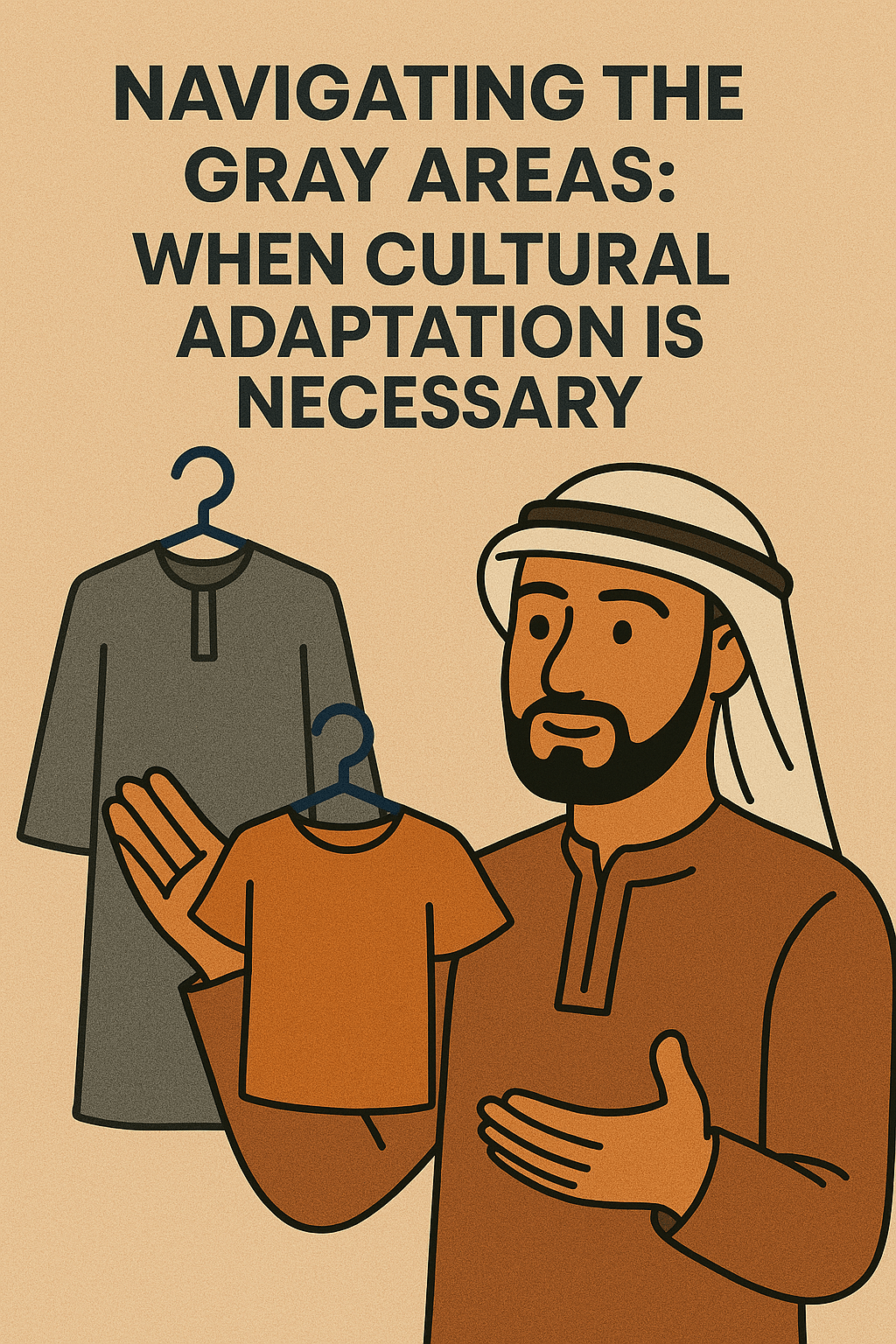
When Adaptation Feels Like Betrayal
I still remember the look on his face—an eager young missionary from the West, sitting awkwardly in a courtyard somewhere between the Red Sea and the Saudi border. Arabic was rolling off his tongue reasonably well, but his hands betrayed his nerves.
“They want me to wear a dishdasha and kiss the sheikh’s cheek,” he said quietly. “It just feels… like I’m pretending. Like I’m betraying where I come from.”
I understood him. That tension is real. Every cross-cultural worker faces it eventually—the gray zone where obedience to Christ and respect for culture seem to blur. But that’s also the zone where the gospel does its most beautiful work.
Incarnation Is the Model
Jesus didn’t preach from a distance. He came close. He took on our skin, our language, our table manners, and walked our dusty streets. That wasn’t compromise—it was strategy. It was love.
Too often, Westerners arrive in the Middle East with a tight grip on clarity: gospel truth is non-negotiable, and cultural adaptation feels like flirting with danger. But when discomfort is mistaken for compromise, walls go up. The message sounds foreign. The messenger feels alien. And the door to the heart stays closed.
What They Hear Before You Speak
Once, during a visit with tribal elders, one of our Western partners was visibly restless. The Arabic coffee came in three rounds, followed by sweet tea, slow conversation, and extended silences rich with cultural meaning. He kept checking his watch, waiting for the “real conversation” to begin.
Later, one of the elders pulled me aside: “He is a good man, but he does not understand us.”
That moment was telling. The gospel hadn’t been rejected—it hadn’t even been heard yet. But the way we engaged had already spoken volumes.
In this region, the gospel is not just spoken—it is embodied. Respect, patience, hospitality—these are sacred currencies. If you spend them well, people may give you their ear. If you bypass them, even truth sounds like noise.
The Difference Between Flexibility and Drift
Let me be clear: adaptation is not blind assimilation. It’s not a slow slide into syncretism. It’s walking a narrow road with a clean heart and a clear compass.
Should you fast during Ramadan with your neighbors? Maybe—if it earns trust and leads to gospel conversations. But not if it confuses your allegiance.
Should you attend a religious ceremony? Possibly—but only if your presence honors the person without endorsing the ritual.
These are not black-and-white rules. They are gray areas that require prayer, humility, and consulting the local church. The Holy Spirit speaks clearly through those who carry both the cross and the culture in their bones.
Love and Lordship: Your Anchors
Adaptation should always be tethered to two things:
Love for the people.
Lordship of Christ.
If either is compromised, it’s no longer adaptation—it’s error.
Paul wasn’t being clever when he said, “I became all things to all people.” He was being strategic. Effective. Devoted. That kind of incarnational ministry doesn’t dilute truth—it delivers it in their language, their world, their skin.
When the Dust Clings to Your Feet
This is hard. It will stretch you. You’ll feel misunderstood—by your supporters, your family, even your fellow workers. But remember this: Jesus didn’t die to keep us comfortable. He died to make us faithful.
Faithfulness here often looks like hospitality before evangelism, listening before preaching, adapting before explaining. It means wearing the robe, drinking the tea, learning the poem, and slowly earning the right to say, “Let me tell you about Isa al-Masih.”
Adaptation is the basin and towel of missions. You kneel in their world, serve in their rhythms, and lift their eyes to a King who did the same.
 The Basin and Towel