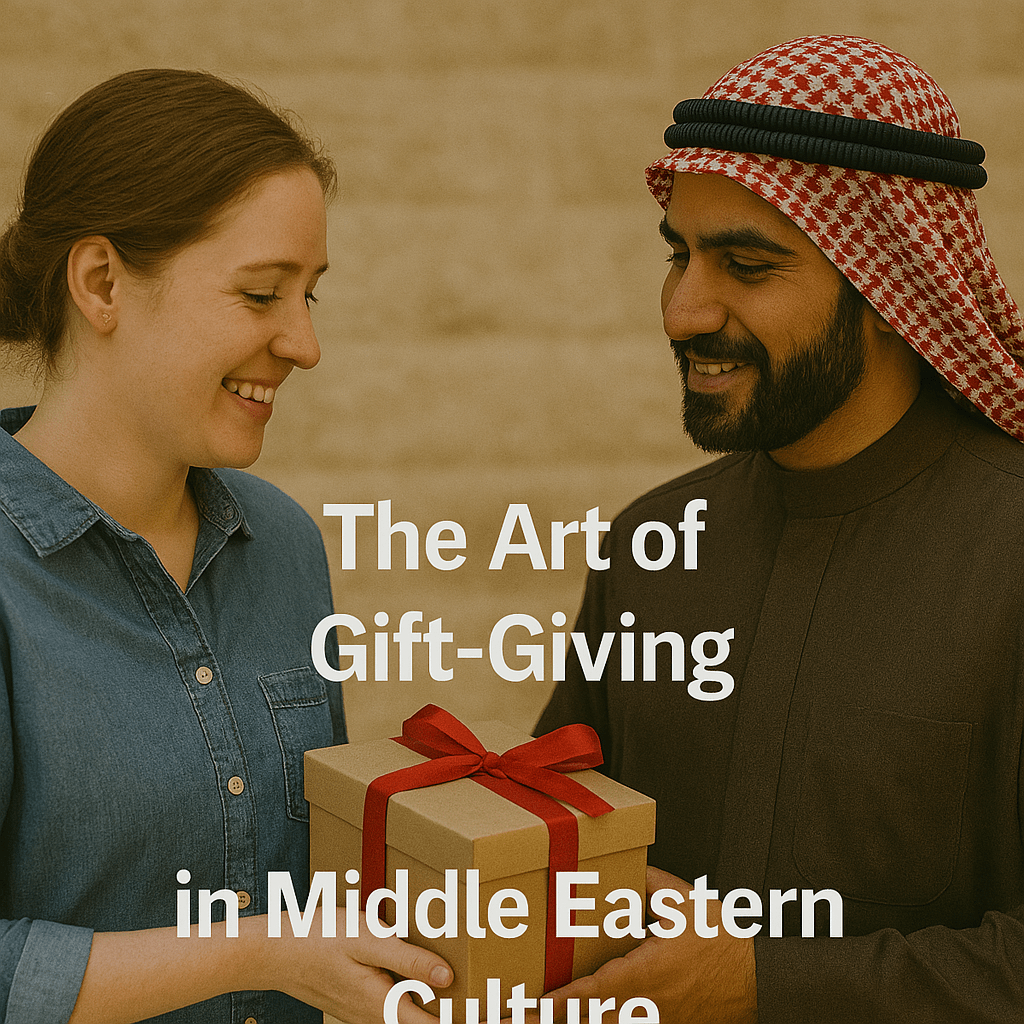
Last week Uncle Abu Khaled invited us over for dinner. Once we got there, he greeted us with a warm embrace. We have brought a small box of Baklava as you should never go empty-handed when someone invites you over. But when we handed it over, Abu Khaled received it with both hands, placed it on a silver tray, and immediately set it aside. The group that was with me was confused, and they asked why he didn’t open it? I explained that in our culture a gift is about the relationship, it’s about honor, it’s about saying we are not taking advantage of your invitation.
Gift-giving in the Middle East is an art form. It is one deeply woven into the fabric of hospitality, respect, and communal life. If you’re a Westerner stepping into this world, understanding this practice will transform the way you connect with people.
Why Gifts Matter in the Middle East
In the West, gifts are often seen as personal expressions of love or appreciation, sometimes exchanged out of obligation during holidays. But in Middle Eastern culture, gifts carry much deeper significance. They serve as:
- A Sign of Honor: Giving a gift is a way to show respect and strengthen relationships.
- A Symbol of Generosity: The concept of karam (generosity) is central in Middle Eastern society.
- A Bridge for Connection: Gifts create bonds between families, friends, and even strangers.
- A Token of Peace: Historically, even rival tribes exchanged gifts to establish goodwill and avoid conflict.
How to Give a Gift the Right Way
Not all gifts are created equal, and how you give them matters just as much as what you give. Here are a few cultural cues to keep in mind:
1. Give with Both Hands or the Right Hand
In many parts of the Middle East, the left hand is traditionally considered unclean. Always offer gifts with your right hand or with both hands as a sign of respect.
2. Expect Your Gift to Be Set Aside
Unlike in Western culture, where a gift is often unwrapped immediately, Middle Eastern hosts will usually set the gift aside to avoid seeming greedy or overly eager. Don’t be offended, this is a sign of good manners!
3. The More Personal, the Better
Expensive gifts aren’t always necessary. A well-thought-out, meaningful present speaks volumes. For example, a book on a topic your host loves, a small, handcrafted item, or even a delicacy from your home country will be appreciated more than generic store-bought goods.
4. Be Mindful of Religious Sensitivities
Avoid gifts that contain alcohol or pork-related products, as many Muslims refrain from consuming them. Also, if giving perfume or scented oils, ensure they don’t contain alcohol. A safe bet is Arabic coffee, a box of high-quality dates, or locally crafted goods.
5. Never Arrive Empty-Handed
If you are invited to someone’s home, always bring something, be it a dessert, a small home décor item, or even flowers. This simple gesture honors your host and acknowledges their hospitality.
Receiving a Gift: The Art of Accepting with Grace
Just as giving a gift is an art, receiving one properly is equally important:
- Always accept gifts with both hands and the right hand.
- Express gratitude but never open the gift immediately unless encouraged to do so.
- If the gift is food, always share it with others—it’s a sign of generosity and inclusivity.
Case Study: A Small Gift, A Lifelong Friendship
A missionary friend once shared a powerful story. He had been working in a rural Middle Eastern village when an elderly man gifted him a simple yet beautifully crafted wooden prayer beads. Not wanting to offend, he accepted them with both hands and expressed deep gratitude. Later, he discovered that this elderly man had very little yet chose to give something personal to honor their friendship. That one small gift opened the door to deeper conversations, trust, and ultimately, a lasting relationship that led to gospel discussions.
Final Thoughts: Gifts Open Hearts
In the Middle East, a gift is never just an object, it is a statement of honor, love, and hospitality. When we understand this, we step beyond cultural barriers and into the realm of genuine connection. Whether you are ministering in the region or simply visiting, never underestimate the power of a well-given gift. It might just open the door to a friendship that lasts a lifetime—and perhaps even an opportunity to share the love of Christ.
 The Basin and Towel