
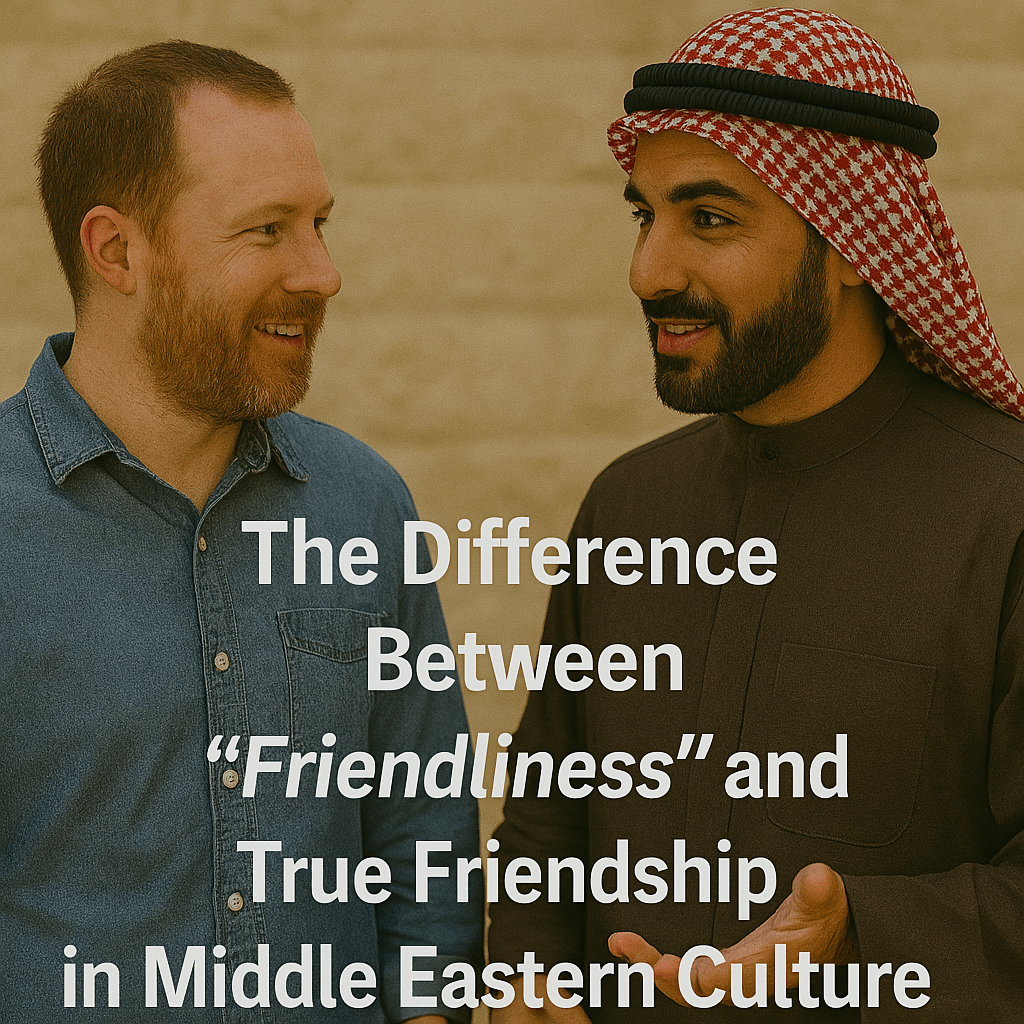
I still remember my first visit to the US back in 2016. I walked into a coffee shop, and the barista greeted me with a warm smile and a strong southern accent. “Hey there! How’s your day going?” For a moment, I thought, Wow, this person really cares! But when I tried to extend the conversation, I quickly realized it was just a polite formality.
Coming from an Arab culture, this confused me. Wasn’t friendliness an invitation to deeper connection? Back home, if someone greets you warmly, they mean it. In fact, they might even invite you over for coffee the same day. But as I would later learn, there is a difference between being friendly and being a friend—and understanding this distinction is crucial for Western missionaries serving in the Middle East.
Friendliness: A Cultural Courtesy
Western culture values politeness. People smile, make small talk, and express interest in your day—even if they don’t plan on taking the relationship further. It’s not dishonesty; it’s just a way to create a pleasant social atmosphere.
Middle Eastern culture, on the other hand, takes friendliness a step further. A warm greeting is not just a formality, is rather an opening. When someone calls you habibi (beloved) or akhi (my brother), they are extending an invitation into a deeper connection. But here’s the key: while friendliness is expected in public interactions, true friendship is something far deeper, and it must be built intentionally over time.
True Friendship: A Lifelong Commitment
In the Middle East, true friendship is not casual, it’s covenantal. If someone calls you a friend, it means they are willing to stand by you no matter what. A real friend will defend your reputation, help you in times of need, and even consider your burdens their own.
I once heard the story of Mark, a Western missionary who worked in Jordan. He had built what he thought was a close friendship with Ahmed, a local believer. They shared meals, had deep conversations, and even studied the Bible together. But one day, when Ahmed faced public criticism from his family, Mark remained silent, not wanting to get involved in “personal matters.” For Ahmed, this was devastating. Friendship in his culture meant standing together no matter the cost, and Mark’s inaction signaled that their relationship wasn’t as deep as he had believed.
Navigating the Difference as a Westerner
So, what does this mean for Western missionaries?
- Recognize that friendliness is just the beginning. Just because someone welcomes you warmly doesn’t mean they consider you a true friend yet. It takes time to build trust.
- Invest deeply in relationships. In Middle Eastern culture, friendship requires commitment. Be willing to show up in times of crisis, celebrate in times of joy, and never treat relationships as transactional.
- Understand that words matter. If you call someone a friend, be prepared to live out that friendship in tangible ways. Your actions will prove whether your words are genuine.
- Be cautious with Western individualism. True friendship in the Middle East often means entangling your life with others. Be prepared to share, sacrifice, and commit beyond what you might be used to.
Final Thoughts
As a Westerner serving in the Middle East, your impact will not come from the number of people you evangelize but from the depth of the relationships you cultivate. Friendliness might open the door, but true friendship is what transforms lives. And in a culture where relationships mean everything, being a true friend might be the most powerful testimony of Christ’s love you can offer.
Are you ready to be more than just friendly? Are you willing to become a true friend?
 The Basin and Towel