
Picture a woven carpet, rich with colors and intricate patterns, laid out in the heart of a bustling Middle Eastern bazaar. Each thread, vibrant on its own, gains meaning and beauty as part of the larger tapestry. This is how faith functions in the Middle East—not as isolated threads, but as part of a communal fabric where every individual’s belief is intertwined with family, neighbors, and society.
The Western vs. Middle Eastern Mindset
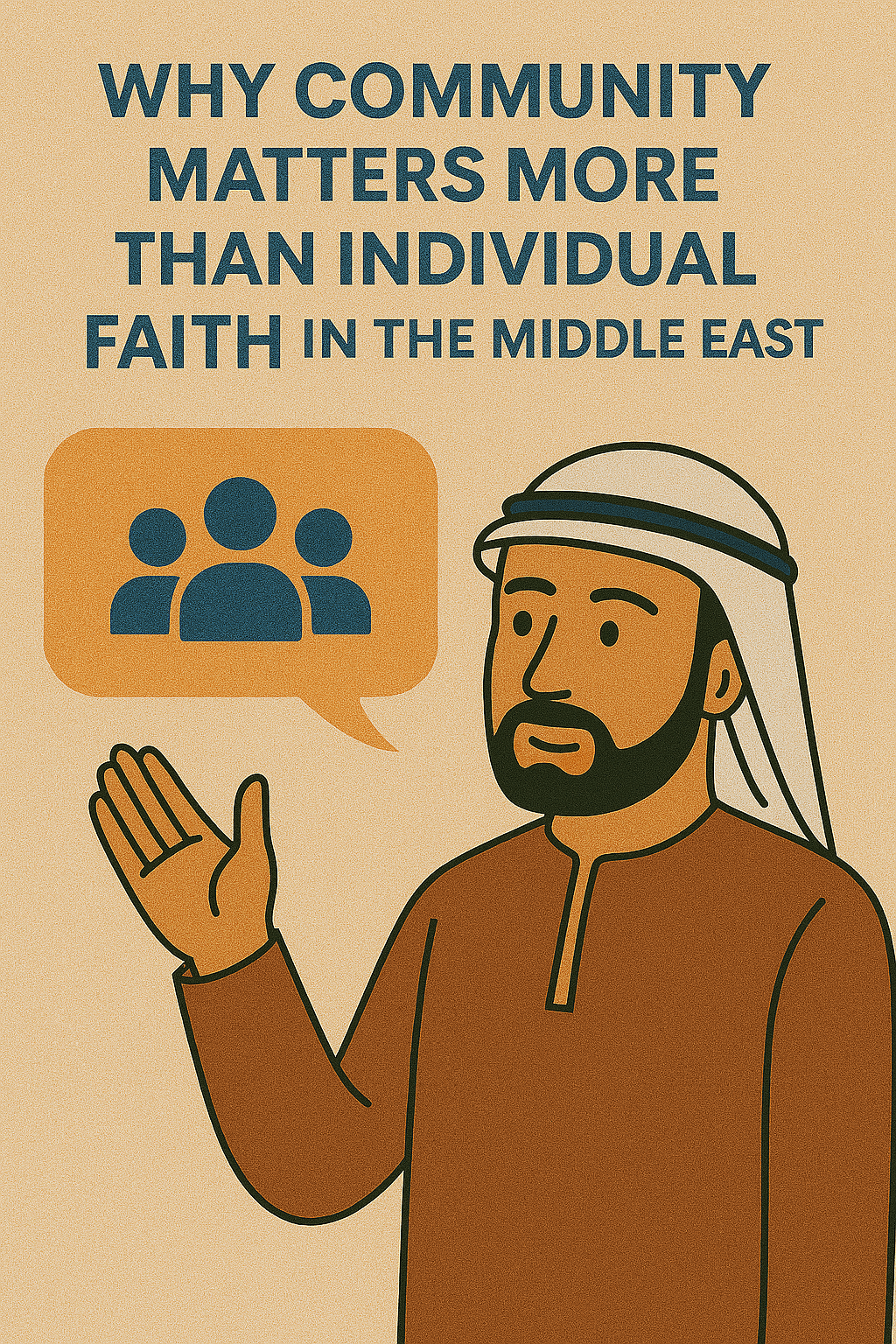
In the West, faith often gets framed as a personal journey—”my relationship with God,” “my quiet time,” “my walk with Jesus.” But in the Middle East, faith is woven into the very fabric of community life. It’s not just about who you believe in, but who you believe with. Your family, your neighbors, your entire social network play a role in your spiritual life.
The Power of Belonging
When someone in the Middle East comes to faith in Christ, it’s rarely a solitary decision. It’s a shift that ripples through their entire community. Accepting Jesus isn’t just embracing a new belief—it can mean redefining family ties, risking relationships, and even facing ostracism. But it’s also why community is so crucial. New believers need a support system that feels like family because, in many cases, they’ve lost their biological one.
Consider Ahmed, a young man who chose to follow Jesus and was immediately disowned by his family. But the local house church embraced him, not just as a fellow believer but as a brother. They celebrated birthdays together, shared meals, and supported each other through life’s ups and downs. Ahmed didn’t just find faith; he found a new family.
Discipleship Happens in Community
In Middle Eastern cultures, learning is communal. Think about how Jesus discipled His followers—He didn’t hand out personal study guides. He lived life with them, taught them through shared experiences, and fostered deep relationships. The same approach thrives here today. Discipleship isn’t a weekly meeting at a coffee shop; it’s walking through life together, sharing joys, struggles, and victories.
How This Shapes Missions
Understanding the communal nature of faith in the Middle East reshapes how we approach missions. It’s not enough to focus on individual conversions. We need to invest in building authentic, tight-knit communities where believers support and grow with each other.
When you’re reaching out to Muslims in the Middle East, remember: you’re not just inviting them into a personal relationship with Jesus—you’re inviting them into a new family. The church becomes a refuge, a home, and a source of identity.
Final Thoughts
Picture that woven carpet again, each thread connected, creating something stronger and more beautiful together than alone. This is what the Gospel looks like in the Middle East. It’s not just about individual hearts being changed, but entire communities being transformed. And that’s why community matters more than individual faith here. Because in the end, we were never meant to walk this journey alone.
So, as you think about missions, remember—it’s not just about saving souls. It’s about building families of faith that can stand strong together in the face of any challenge. That’s where the true power of the Gospel shines.
 The Basin and Towel