The Taxi Driver Who Changed a Missionary’s Perspective
A young missionary named James was running late for a meeting in Amman, Jordan. He hopped into a taxi and, out of habit, greeted the driver in Arabic: “As-salamu alaykum!” The driver’s eyes lit up. “Wa alaykum as-salam!” he replied warmly, shifting from the distant politeness he usually displayed with foreigners into a full-blown conversation.
James struggled through his Arabic, and the driver graciously encouraged him. As James fumbled with his vocabulary, the driver smiled and said, “You care about us. You learn our language.” At the end of the ride, he refused James’ money. “You are my brother,” he said.
That moment changed everything for James. He realized that even his broken Arabic was a bridge. It wasn’t about fluency; it was about connection.
1. Arabic Breaks Down Walls of Distrust
In many parts of the Middle East, Westerners are viewed with suspicion. Are you a tourist? A spy? A foreigner who just wants to take and not give? But the moment you speak a little Arabic, those walls start to crumble.
Speaking even basic Arabic tells people you respect their culture. It’s a way of saying, “I see you. I value you.” And in a region where honor and hospitality are everything, that message is powerful.
As a missionary, you must understand that trust is earned slowly. Language is one of the quickest ways to show that you are not just passing through but are willing to walk alongside people in their world.
2. It Opens Doors to Relationships
James once met a shopkeeper in Cairo who, upon hearing him attempt Arabic, insisted he join him for tea. Over the next hour, the shopkeeper shared about his life, his family, and his dreams. Would that have happened if James had just stuck to English? No way.
In the Middle East, relationships are everything. Ministry here is not about quick evangelism; it is about deep, personal connections that often take years to build. When you try to speak Arabic, even if it’s just greetings and basic phrases, people open up in ways they wouldn’t otherwise. It’s like unlocking a secret door to deeper conversations, friendships, and even gospel opportunities.
3. It Protects You from Being an Outsider
When you don’t understand Arabic, you miss out on more than just conversations. You miss context. You miss jokes. You miss warnings. And sometimes, you miss danger.
In a region where misunderstandings can have big consequences, knowing a little Arabic helps you navigate daily life with confidence. You can understand what’s happening around you, whether in a marketplace, a taxi, or a negotiation. You become an insider—not just another clueless foreigner.
If you want to stay safe, avoid cultural pitfalls, and show genuine care, learning Arabic is non-negotiable.
4. It Shows the Love of Christ in a Tangible Way
Jesus met people where they were. He spoke their language, walked their streets, and understood their struggles. As His followers, we are called to do the same.
When you learn Arabic, even at a beginner level, you embody Christ’s love in a practical way. It shows humility, patience, and a willingness to enter into another’s world. And often, it earns you the right to be heard when you share the good news of Jesus.
In the Middle East, actions speak louder than words. Learning Arabic is an action that tells people, “I love you enough to learn your world.” That testimony is powerful.
5. It’s Easier Than You Think
A lot of people avoid Arabic because it seems hard. Yes, the script is different. Yes, the sounds are unfamiliar. But Arabic is surprisingly logical, and you don’t have to be fluent to make a difference.
Start small. Learn greetings, basic questions, and key phrases. Even 10 minutes a day can lead to significant progress over time.
Remember, perfection is not the goal—relationship is. People don’t care if you make mistakes; they care that you are trying.
Final Thought: Prepare Your Heart and Mind
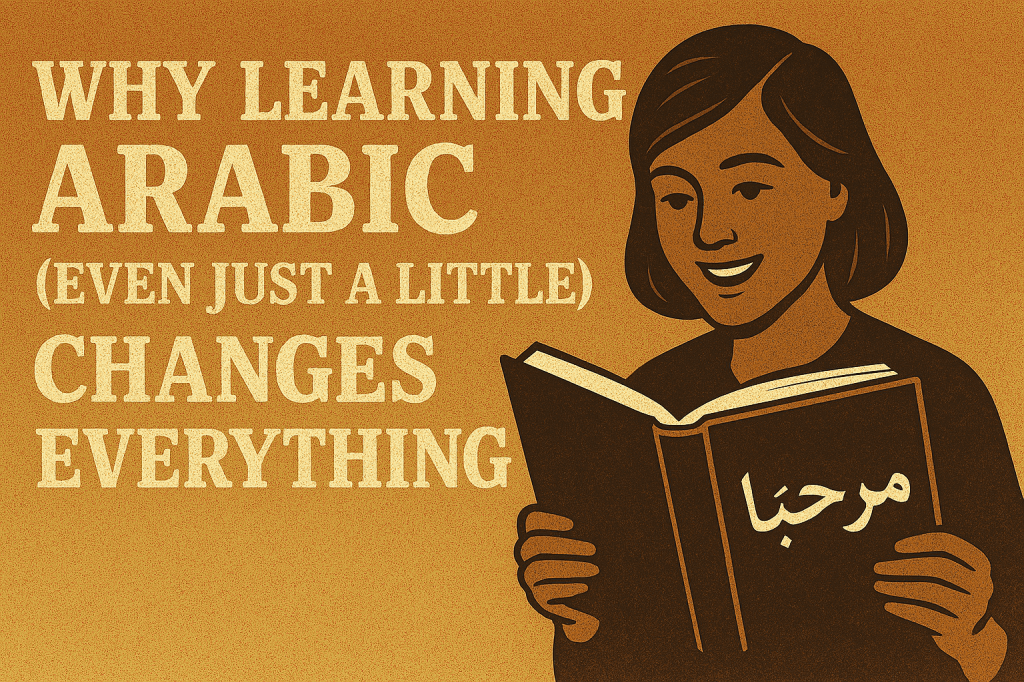
If you’re serious about missions, relationships, and ministering effectively in the Middle East, start learning Arabic today. Even just a little changes everything.
So here’s a challenge: Learn five new Arabic phrases this week. Use them. Watch what happens. You might be surprised at the doors God opens.
Your mission here isn’t just about preaching—it’s about presence. And presence begins with language.
 The Basin and Towel