
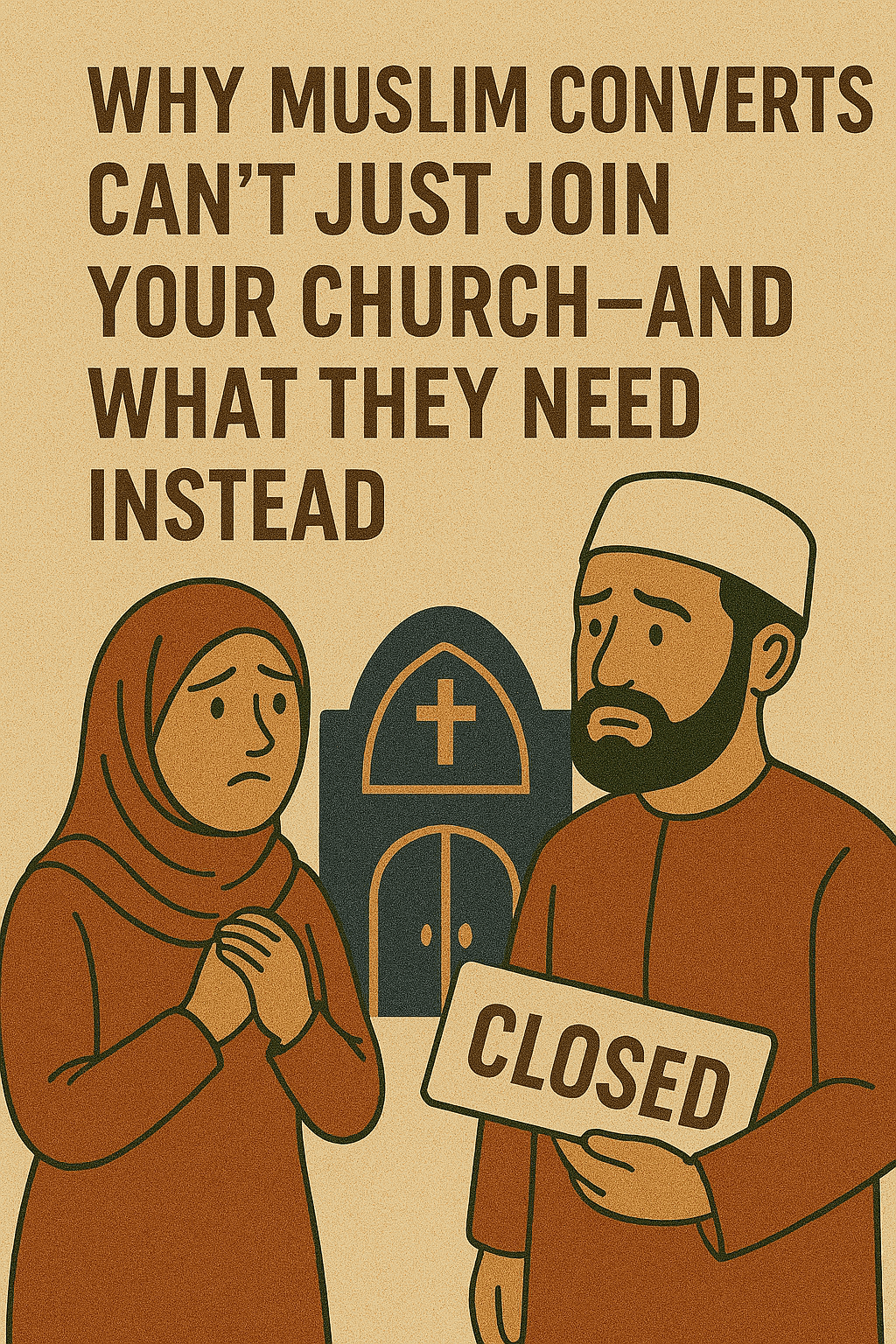
Why Muslim Converts Can’t Just Join Your Church—and What They Need Instead
In 2012, Ahmed walked into our church in Beirut. I still remember eyes darted nervously around the sanctuary, taking in the unfamiliar symbols, the cross at the front, and the worship band softly tuning their instruments. Ahmed had recently given his life to Christ after months of quiet conversations over tea in his small apartment doing a Discovery Bible Study. But now, standing in a church in the heart of the city, he felt more like an outsider than ever before.
This is a common story for many Muslim-background believers (MBBs). We often assume that the moment someone professes faith in Christ, the next step is simple: plug them into a local church, get them involved, and let discipleship happen naturally. But for MBBs, it’s rarely that straightforward.
The Cultural Gap Is Wider Than You Think
For many Muslims, the church feels like foreign territory. I don’t mean just spiritually, but culturally. The music, the style of worship, the way people dress, it can all feel alien. Imagine stepping into a completely different world overnight, where everything from the language to the social cues feels off. Even the worship songs may feel very weird. “The blood of Christ washes over us”, for example, have left many weirded out.
In Muslim cultures, community is deeply intertwined with faith. Mosques are not just places of worship; they’re centers of social life, family gatherings, and community decision-making. When a Muslim converts to Christianity,they’re leaving behind an entire way of life, sometimes even facing rejection from their families and friends.
Now, imagine trying to replace that rich, tight-knit community with a weekly Sunday service where most people don’t understand your background, your struggles, or the sacrifices you’ve made. It’s not enough.
The Hidden Cost of Conversion
For many MBBs, conversion is a life-altering choice that comes with significant risks. They might face hostility, isolation, or even threats to their safety. Ahmed, for example, hadn’t spoken to his family in months. His parents disowned him when they found out about his faith. Walking into a church felt dangerous.
Many churches aren’t prepared to handle this level of risk. They don’t have systems in place to protect MBBs from potential threats or to support them emotionally and practically as they navigate their new reality.
What Muslim Converts Need Instead
- Authentic, Relational Discipleship: MBBs need more than just Sunday services. They need deep, meaningful relationships with believers who are willing to walk alongside them in their faith journey. This means meeting regularly, sharing meals, and being present in their everyday lives.
- Culturally Sensitive Communities: Churches need to create spaces that are welcoming to people from different backgrounds. This might mean starting a house church or small group specifically for MBBs, where cultural differences are acknowledged and respected.
- Holistic Support: MBBs often face practical challenges—finding housing, securing employment, or even dealing with legal issues related to their conversion. Churches should be prepared to offer holistic support, helping with these practical needs while also providing spiritual guidance.
- Safe Spaces: Safety is a major concern for many MBBs. Churches need to be mindful of this and create environments where MBBs feel secure. This might mean keeping their faith confidential or meeting in private, discreet locations.
- Understanding and Patience: The journey of an MBB is often filled with ups and downs. They might struggle with feelings of guilt, fear, or confusion. Churches need to approach them with patience, understanding that discipleship is a process that takes time.
The Church as a True Family
Ultimately, what MBBs need is a church that functions as a true family—not just a place to attend on Sundays, but a community that embraces them fully, understanding their unique struggles and standing with them through every challenge.
Ahmed eventually found that kind of community. It wasn’t in a traditional church building, but in the living room of a small group of believers who met weekly to pray, share meals, and study the Bible together. It was there that Ahmed felt truly seen, known, and loved—not just as a new believer, but as a brother in Christ.
The call for us is clear: to be the kind of church that doesn’t just welcome Muslim converts at the door but walks with them into the fullness of life in Christ. That’s the church they need—and the church we are called to be.
 The Basin and Towel