
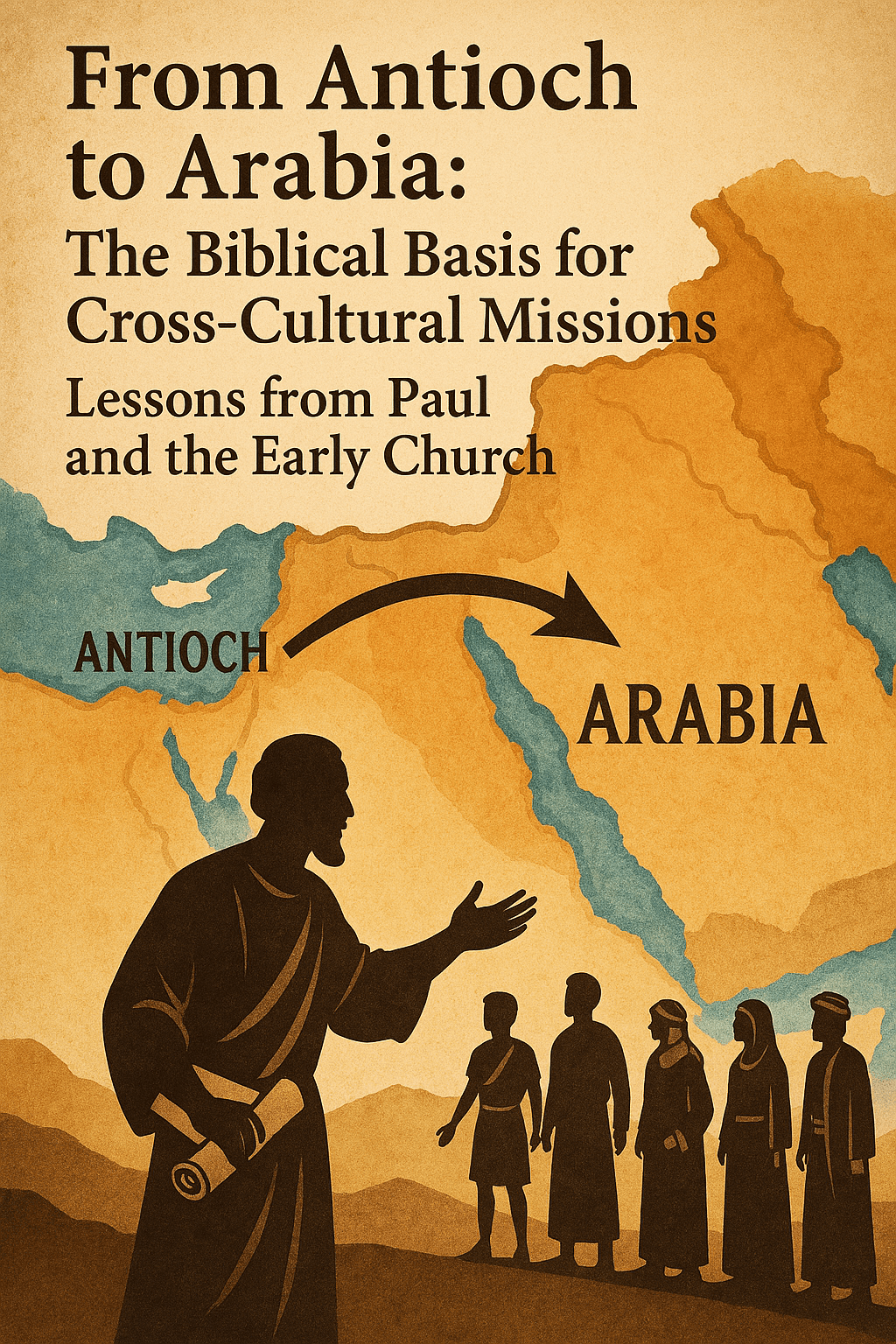
In the city of Antioch, The Holy Spirit spoke: “Set apart for me Barnabas and Saul for the work to which I have called them.” (Acts 13:2)
That moment changed history. For the first time, the Church intentionally sent people not to their own, but to others. Different language. Different worldview. Different customs. This was not just evangelism. This was cross-cultural mission.
And it wasn’t accidental. It was biblical. Intentional. Spirit-led. Church-rooted.
Today, as global Christianity navigates crises of identity, nationalism, and fear of “the other,” we must return to our roots. Cross-cultural mission is not a Western invention—it is a New Testament imperative.
1. Paul: The First Cross-Cultural Missionary
Paul was not merely an apostle—he was a bridge-builder, a contextual theologian, a mission strategist. He didn’t just preach Christ crucified; he did so in Greek, using Hebrew Scriptures, to Gentile minds, in Roman colonies.
His life proves that cross-cultural mission isn’t peripheral—it’s central to the gospel’s advance.
Key Lessons from Paul:
- The Gospel Is Translatable:
In Lystra, he quoted pagan poets. In Athens, he reasoned with philosophers. In Jerusalem, he spoke Hebrew. In Rome, he appealed to Caesar.
The message stayed the same, but the method moved with the people.
- Context Matters:
He became “all things to all people” so that “by all means [he] might save some” (1 Cor. 9:22).
Effective mission requires empathy, adaptation, and humility.
- The Church Must Send:
Paul’s calling was personal, but his sending was communal. The church in Antioch laid hands on him.
Mission is not a solo adventure—it’s the Church’s collective obedience.
2. The Early Church: Born Multicultural
Too many assume missions began in Acts 13. But cross-cultural witness was in the DNA of the church from day one:
- Pentecost was a multilingual miracle. Jews “from every nation under heaven” heard the gospel in their own tongues (Acts 2:5–11). The Spirit made translation the first sign of His presence.
- The Ethiopian eunuch in Acts 8—an African court official—received Christ before Paul’s first journey.
- Cornelius, a Roman centurion, becomes the first Gentile convert not because of strategy but because of a supernatural vision (Acts 10). God had to re-wire Peter’s theology to prepare him.
The takeaway?
The church wasn’t meant to be a Jewish sect, nor a Roman institution. It was always meant to be a global family.
3. Cross-Cultural Mission Is the Fulfillment of God’s Promise
This is not just about Paul or the apostles. This is about God’s heart from the beginning:
- Genesis 12:3 – “All nations will be blessed through you.”
- Psalm 67 – “Let the nations be glad and sing for joy.”
- Isaiah 49:6 – “I will make you a light for the nations.”
- Matthew 28:19 – “Go and make disciples of all nations.”
- Revelation 7:9 – A multitude from every tribe, tongue, and people, worshipping the Lamb.
From the garden to the city, God has been gathering the nations.
Cross-cultural mission is not Plan B. It is the heartbeat of the Bible.
4. Why This Matters Today
For Western Churches:
- Missions is not colonialism. It’s incarnational. Paul didn’t conquer cultures—he entered them.
- The gospel must be contextualized, but never compromised.
- The Church must again become Antioch, not just Jerusalem—sending, not just preserving.
For Majority World Leaders:
- You are not just the mission field. You are the mission force.
- Paul’s model shows us: cross-cultural sending is for every church, not just the wealthy or Western.
For Every Believer:
- You don’t need a passport to be cross-cultural. The nations are now next door.
- The Spirit who sent Paul is the same Spirit in you.
A Word from the Desert
I once asked an Arab believer why he risked so much to reach a nearby Bedouin tribe with the gospel. His answer has never left me:
“Because Jesus crossed heaven to reach me. I can cross a few kilometers to reach them.”
The gospel is not for one people, one place, or one language.
It is for every nation, every culture, every heart.
Let us go—again—with Paul, with passion, and with power.
 The Basin and Towel