
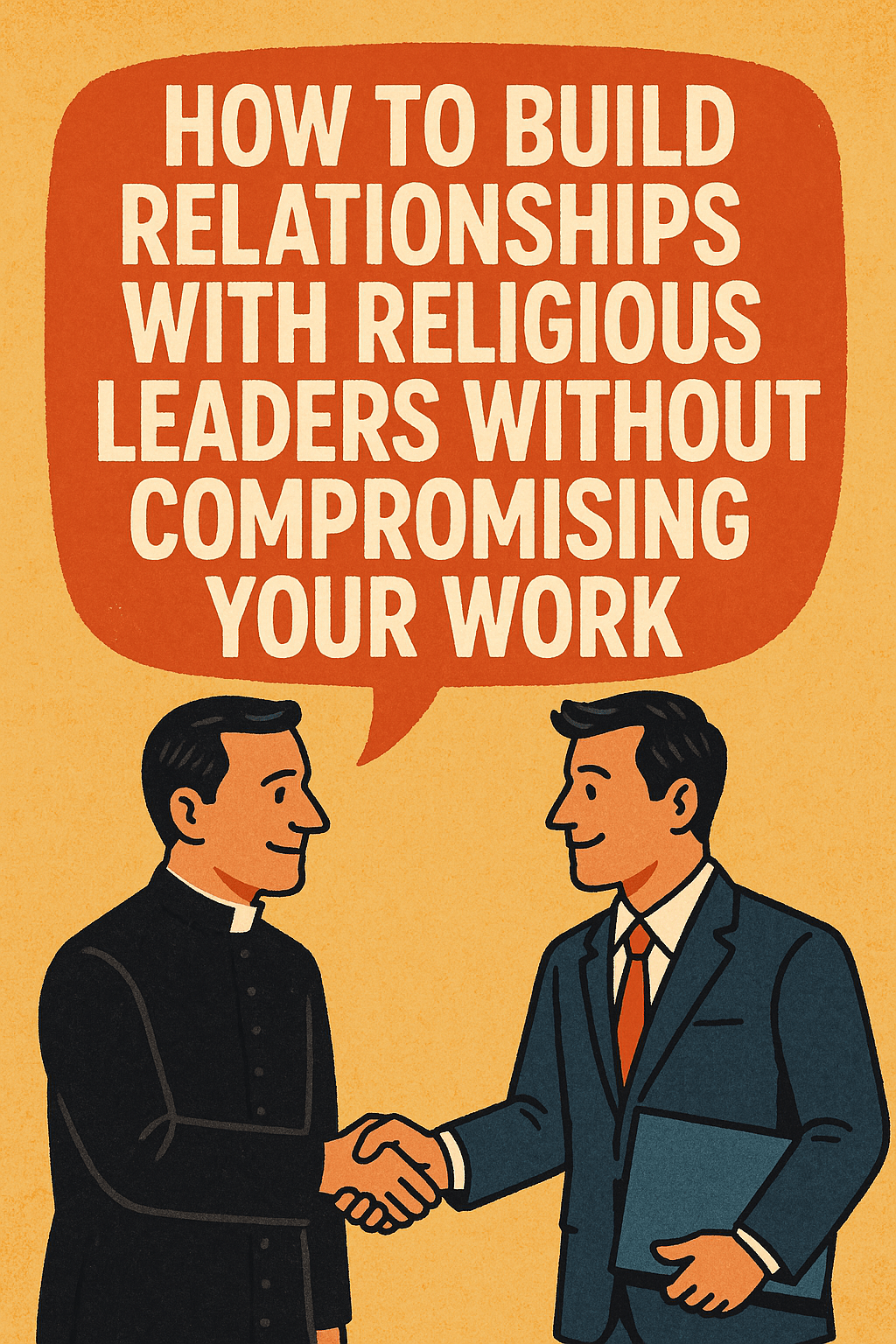
There’s a moment—often overlooked—when the doors close behind you, the tea is poured, and the conversation finally begins. You’re no longer in the bustling courtyard or the crowded mosque. You’re in a private room, shoes off, the Qur’an on a shelf above you, and the imam across the cushions. And here’s the surprising part: you’re not talking to the same person you heard speak publicly.
This is not duplicity. It’s the deeply human dynamic of public versus private faith, a distinction that, while present in all cultures to some degree, plays out in particularly intricate ways in the Islamic world. Understanding this distinction may be the single most strategic key to building real, meaningful, and long-term relationships with religious leaders—without compromising your purpose or integrity.
The Mosque and the Majlis
In public, religious leaders—imams, sheikhs, and local scholars—carry the weight of their community’s expectations. They speak with conviction, often using strong language to draw clear lines between what is “Islamic” and what is not. Their sermons must defend the faith. Their public image must remain above reproach. In such a setting, nuance is rarely rewarded.
But in private? That’s where the real questions surface.
I remember a respected imam who thundered against Western values in his Friday khutbah. Yet that same evening, seated in his home with his children playing nearby, he gently leaned in and asked, “Do you think God listens to me if I’m not sure He hears me?”
The shift wasn’t deceitful. It was contextual. Public spaces require the performance of certainty. Private spaces permit the confession of humanity.
What This Means for You
If you’re serious about building bridges with religious leaders, you must understand this rhythm. And more importantly, you must learn to build credibility without pushing an agenda.
Here’s how:
1. Respect the Honor Code
Never question a leader’s beliefs in public, not even subtly. Public challenge in honor/shame cultures is not just rude—it’s relational suicide. If something must be said, wait until the tea is poured and the door is shut.
2. Invest Time Before Truth
Relationship precedes revelation. If you haven’t eaten at his table, met his family, or visited him during illness, don’t expect your theological insights to be welcomed. You’re not a voice until you’ve become a guest.
3. Listen for the “Second Voice”
Public statements often reflect a first voice—what must be said. The second voice, however, speaks in private and reveals what is really believed or questioned. Discern the difference. Don’t react to the first voice; respond to the second.
4. Be Who You Are—Always
Respect is earned not by blending in, but by standing firm in humility. A man who never hides his convictions but carries them with kindness becomes magnetic. People respect consistency far more than theological camouflage.
A Story from the Mountains
In a remote village nestled between two cliffs, a young believer was welcomed regularly into the home of an elderly religious teacher. They shared meals, stories, and many cups of bitter coffee. Over time, the teacher allowed the visitor to hear his worries about the younger generation, his doubts about certain hadith, and his longing for a deeper connection with God.
But one day, during a larger gathering, the same teacher publicly denounced “foreign influence” and reaffirmed the traditional interpretation of every pillar of Islam.
The visitor didn’t flinch. He simply sipped his coffee and smiled. Because he knew the difference between the man and the microphone.
Months later, when the teacher fell ill, he asked the visitor to pray for him—in Jesus’ name.
The Hidden Curriculum of Relationship
You’re not just building friendships. You’re creating safe places for truth to surface—slowly, painfully, beautifully. You don’t need to “win” an imam. You need to walk with him until trust builds a path wide enough for questions.
And here’s the beautiful twist: when you give someone space to be real, they often invite you into the sacred places of their story. That’s where seeds take root.
Don’t compromise your calling. But don’t forget: a closed door often opens the heart.
What Makes This Work?
- Share this if you’ve ever felt like someone opened up to you only when no one else was watching.
- Tag a friend who knows how to listen better than they speak.
- Have you ever seen a public-private faith dynamic? Tell your story in the comments.
 The Basin and Towel