
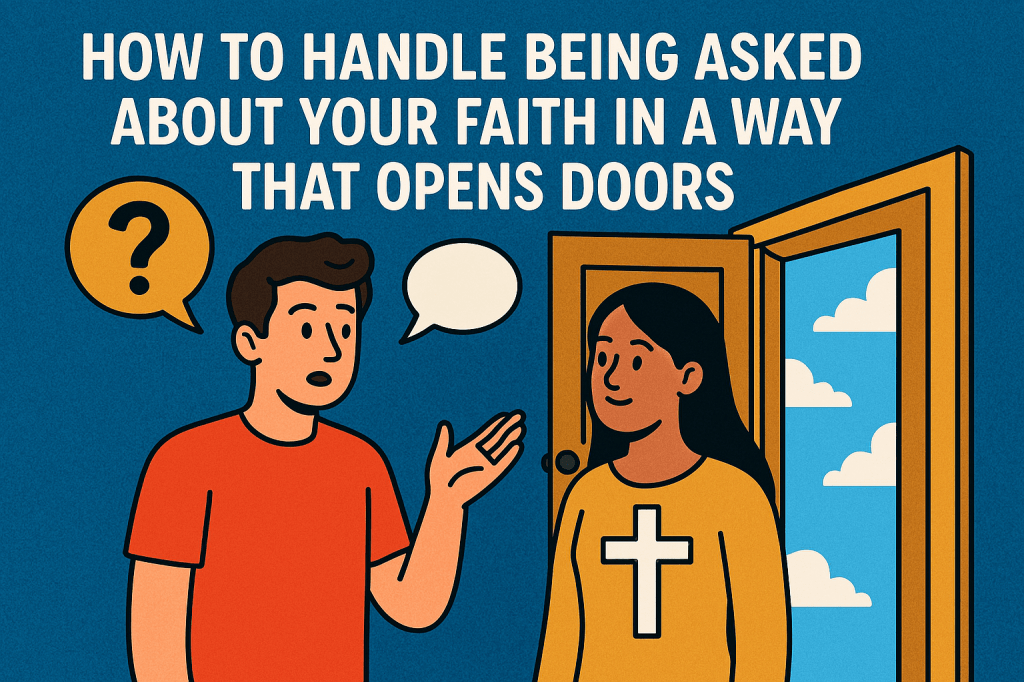
There’s a moment that comes to many of us—quiet, spontaneous, and unscripted—when someone leans in and says: “So… what do you believe, really?”
Not in a debate. Not during a lecture. Not even in a mosque or a church. Just two people, sitting across from each other, hearts slightly cracked open. The air changes. The conversation shifts. And everything that happens next matters more than we realize.
Public Faith vs. Private Faith: A Quiet Reality
In many parts of our world, especially here in the Middle East, there’s a long-standing tension between public religion and private belief. It’s not always hypocrisy. It’s survival. It’s culture. It’s respect. It’s also deeply personal.
Public Islam is often defined by rituals, dress, and language that align with societal expectations. It’s the call to prayer, the shared fast, the common phrases—in shaa Allah, alhamdulillah—woven into the rhythm of everyday speech. Private Islam, on the other hand, is often filled with quiet wrestling, deep questions, and deeply personal experiences with God that aren’t always shared aloud. It’s in the early morning tears, the handwritten prayers, the hushed reading of Scripture—sometimes both the Qur’an and the Injil.
This gap—between the public and the private—is not unique to Muslims. But it’s particularly pronounced here, where religion is more than a personal choice; it’s an identity, a community, even a passport.
So when someone asks you about your faith, you need to realize: they’re not always asking for your answer. Sometimes they’re asking for your permission. Permission to wrestle. Permission to wonder. Permission to open up their own private faith and see if it can breathe.
The Art of Answering with Invitation
When asked about your faith, especially in cultures shaped by honor and subtlety, direct answers can often close doors rather than open them. That doesn’t mean we become evasive or ashamed. It means we become wise. Like our Master, who often responded to questions with parables, stories, or better questions.
Here’s the key: Your response should feel like hospitality, not a courtroom defense.
Let me tell you a story.
The Taxi Driver and the Coffee Shop
A friend of mine—we’ll call him Sami—was once in a taxi in Amman. The driver, a middle-aged man with a well-worn Qur’an on his dash, started chatting. As often happens, the talk turned to religion.
“You seem different,” the driver said. “Are you a Muslim?”
Sami smiled and paused. “I follow Isa,” he said. “I’ve been learning from His words and His life.”
The driver raised an eyebrow. “What do you mean? Like a Christian?”
Sami didn’t jump into theology. He didn’t launch into a list of doctrines. Instead, he asked, “Have you ever read the words of Isa for yourself?”
“No,” the driver admitted, “but I’ve heard they’re beautiful.”
“Would you want to read some over coffee sometime?”
They exchanged numbers. A week later, they sat in a coffee shop, reading the Sermon on the Mount. No arguments. No pressure. Just two men and the words of a Prophet who called us to love our enemies, to turn the other cheek, to bless those who curse us.
That’s how doors open.
Principles That Keep the Door Open
- Stay curious longer than you’re comfortable.
Ask more questions than you answer. When someone asks about your faith, they’re often testing the waters. Don’t flood them. Offer a gentle current that invites them to swim. - Lead with stories, not statements.
Jesus used stories. So should we. Testimonies are powerful because they offer a mirror, not a hammer. Your story isn’t a threat—it’s an invitation. - Speak to the heart, not just the mind.
Many of our Muslim neighbors feel God is near but not always personal. Talk about how God has walked with you, spoken to you, comforted you. - Name the shared longing.
Longing for peace, for forgiveness, for hope—these are not Christian or Muslim longings. They’re human. Begin there. - Don’t win arguments. Win trust.
If someone leaves your conversation thinking, “That person listens well. That person is safe. That person respects me,” you’ve done more than a thousand debates ever could.
Final Word
The goal is not to convert conversations into something else. The goal is to create spaces where real faith can breathe—where public masks can drop, and private hearts can speak freely. That is holy ground.
So the next time someone asks, “What do you believe?”—don’t give a lecture. Set the table. Brew the coffee. And let Isa’s words do what they’ve always done: draw hearts to Himself.
 The Basin and Towel