
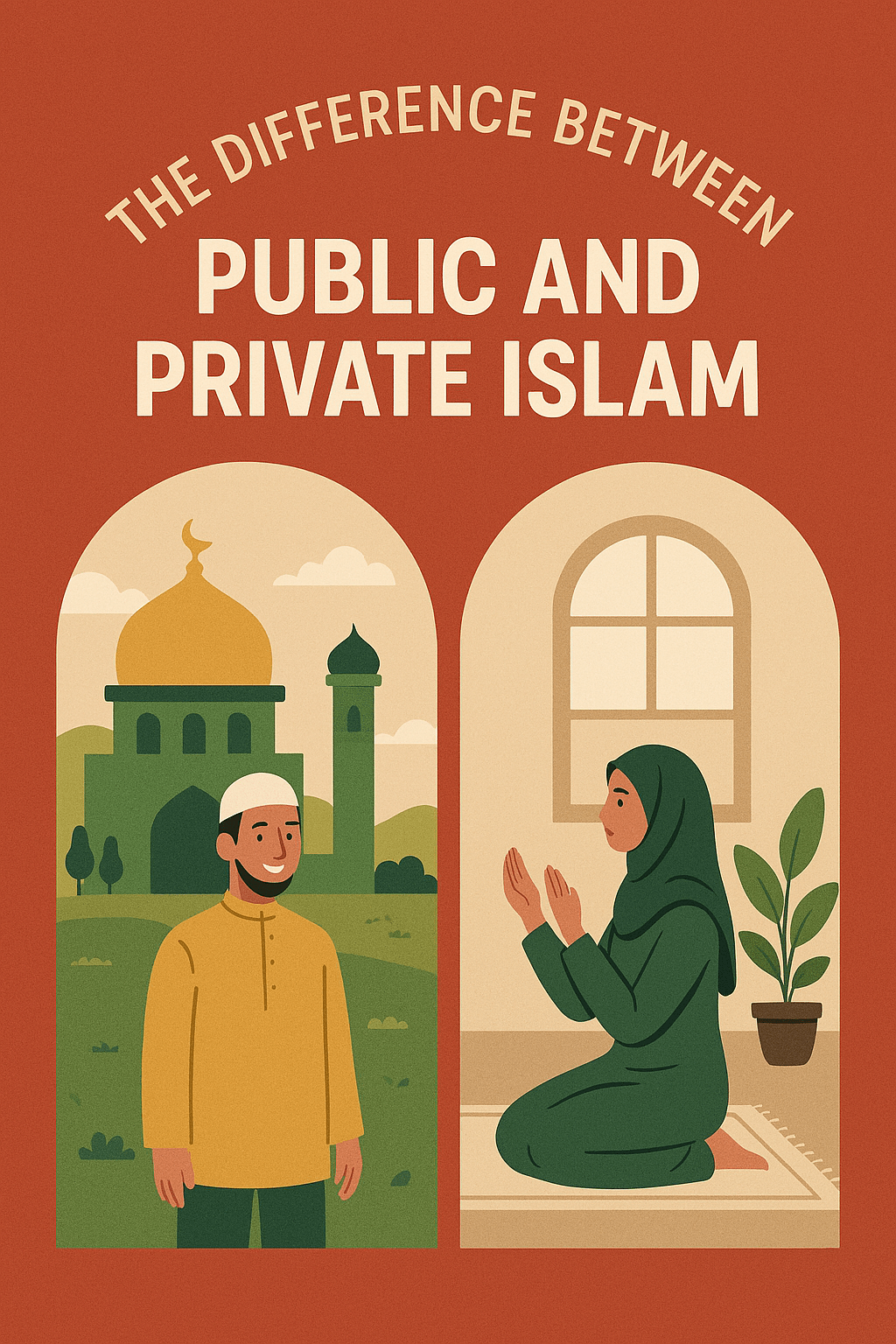
There’s a story of a shopkeeper in Damascus—let’s call him Abu Khalid. Every morning, like clockwork, he opens his store just before the call to prayer. He sweeps the floor, arranges his spices in perfect rows, then rolls out a clean prayer mat right by the front counter. As the muezzin’s voice echoes through the alleyways, he stands, bows, and recites, eyes focused, body disciplined.
Tourists stop, watch, even snap photos. Some comment on his devotion. But what they don’t see—what many never see—is how Abu Khalid prays at home: a quick murmur before collapsing into bed, a half-hearted gesture between television programs, sometimes skipped altogether when business has been draining.
This is not hypocrisy. It is survival.
In many Muslim societies, the public square and the private room are two different arenas. One demands performance; the other reveals reality. And understanding this distinction is not just important—it’s essential for anyone who desires to build real relationships, communicate Christ wisely, or make sense of why a devout neighbor might be more receptive to spiritual conversations in their living room than at the mosque courtyard.
Public Islam: The Sacred Stage
In the bustling café or the university hallway, Islam is practiced with ceremony. It’s not just about what one believes—it’s about how that belief is seen. Public Islam is shaped by centuries of communal expectations, legal traditions, and social pressures. In some countries, it’s even legally enforced. A man may feel obligated to fast during Ramadan not because of conviction, but because his coworkers do. A woman may wear the hijab outside but remove it once inside her home.
These visible markers become social signals. They say: I belong. I conform. I honor tradition. But they don’t always speak to what’s happening inside the heart.
Private Islam: The Honest Space
Step behind the curtain—into the home, into the soul—and the picture can change. It is here that questions are asked. Doubts emerge. Curiosity grows.
Many Muslims wrestle with things they would never voice publicly: “Does Allah hear me?” “Why do I feel distant from God?” “Is this all there is?”
In these quiet spaces, hearts are often more open to conversation, Scripture, and the person of Jesus. Not because they are abandoning Islam, but because they are searching for something real. Something personal. Something that doesn’t require performance.
A Door, Not a Wall
It’s tempting to interpret this contrast as duplicity. But let’s be honest—don’t we all wear different faces in different places? The difference here is not moral—it’s cultural, even structural. In honor-shame contexts, one’s standing before others is not just important—it’s everything.
If we fail to grasp that, we’ll push too hard, too soon, in the wrong setting. We’ll miss that the real conversations often begin over tea, not in debate. In the courtyard, a man recites the Qur’an; in the living room, he whispers, “Tell me more about this mercy of Jesus.”
Why This Matters for the Kingdom
Understanding the split between public and private Islam doesn’t just make us better observers. It makes us better bridge-builders. It teaches us:
- To be patient. Trust takes time. People rarely expose their private beliefs until they know you’re safe.
- To be discerning. The loudest expressions of faith may not reflect the deepest convictions.
- To be strategic. The gospel often walks through the back door, not the front gate.
Final Thought
Abu Khalid’s story is not rare—it’s the norm. And it’s precisely in these quiet, personal spaces that the Holy Spirit is moving.
We don’t need to pull down the veil. We just need to be present when it’s drawn back.
 The Basin and Towel