
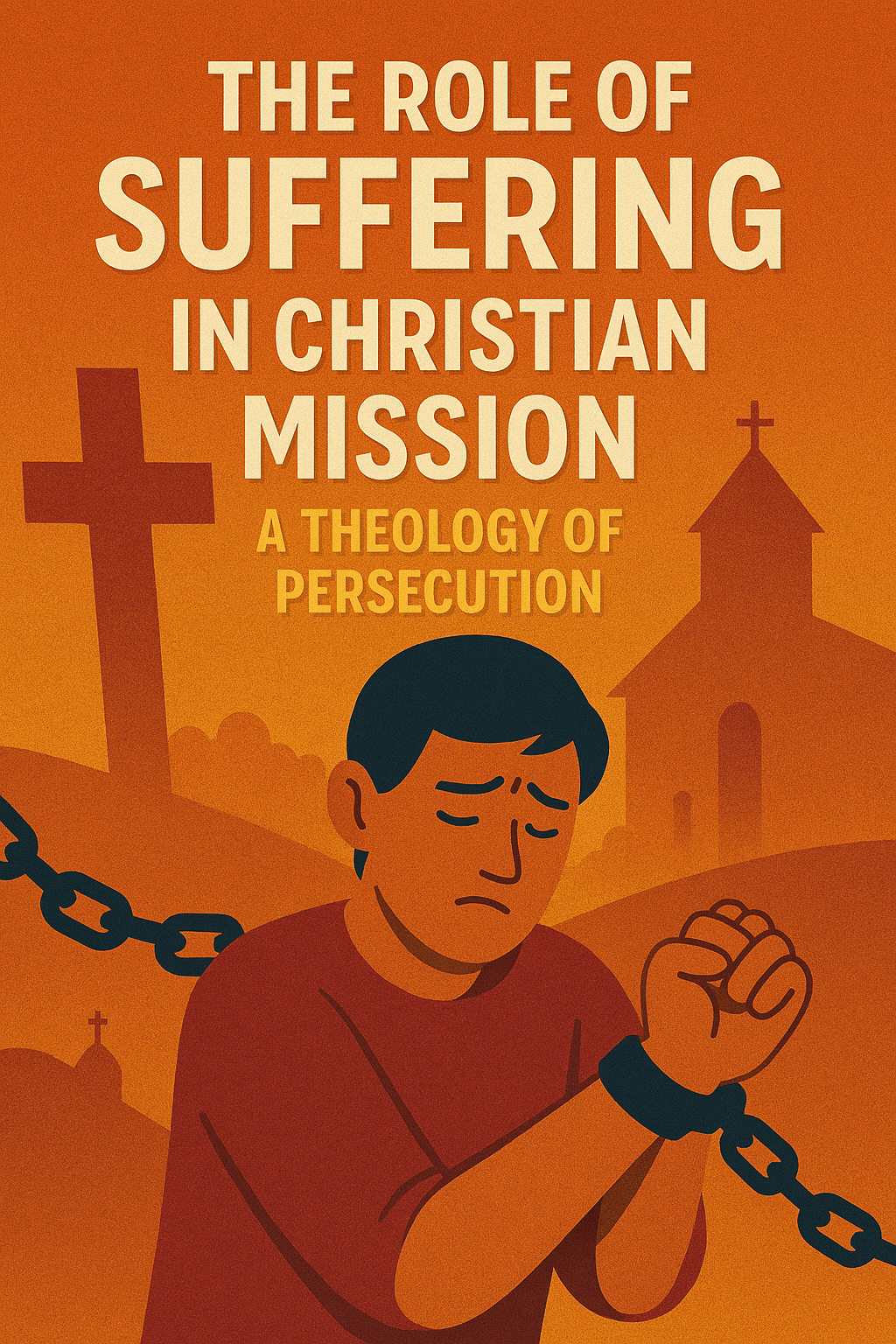
“The blood of the martyrs is the seed of the Church.”
— Tertullian, 2nd-century Church Father
One day, I sat across from a quiet, elderly man who had lost everything for following Jesus. His house burned. His family disowned him. His name, once spoken with honor in the village, had become a curse. And yet, he smiled. “The fire that destroyed my home,” he said, “only made my faith burn hotter.”
That man understood something many in the West often forget, or perhaps, try to avoid altogether: suffering is not the enemy of mission. It is the crucible of it.
The Forgotten Power of Persecution
Modern Christianity, particularly in affluent societies, has been seduced by a dangerous myth: that God’s blessing is always comfortable, always visible, always safe. But Christianity was born in persecution. Our Savior was crucified. The early Church met in catacombs. The apostles were hunted, imprisoned, and killed. And still, the gospel advanced.
Let me say it plainly: there is no biblical mission without the cross. The resurrection does not come without the tomb.
A Theology Rooted in Christ
Christ’s mission was not to avoid suffering but to embrace it for the sake of the world. He “learned obedience through what he suffered” (Heb. 5:8), and in doing so, He revealed a kingdom that triumphs through apparent defeat. The theology of suffering is not some side doctrine—it is core Christology.
Paul, the greatest missionary theologian, saw suffering not as an obstacle but as a badge of authenticity:
“I bear on my body the marks of Jesus.”
— Galatians 6:17
His calling came with chains. His ministry was not in spite of beatings and shipwrecks and prisons—but through them. The same is true for us.
Why God Allows Persecution
- To Refine the Church
When faith costs nothing, it means little. But where persecution comes, nominalism dies and only the pure gold remains. The Church in the Middle East today is small—but it is pure, powerful, and alive. There is no room for lukewarm religion in the shadow of a sword. - To Advance the Gospel
The paradox of persecution is this: the more the Church bleeds, the more it grows. From Rome to modern-day Iran, persecution has been the hidden engine of gospel expansion. Why? Because suffering believers become living sermons. Their witness cannot be ignored. - To Reveal Christ to the Persecutors
The persecuted often become the missionaries to their own persecutors. I’ve seen radical sheikhs secretly drawn to Christ through the unwavering love and humility of those they sought to silence. This is not fiction. This is happening today.
A Call to the Western Church
Do not envy the suffering of your brothers and sisters, but do not avoid their theology either. We must all carry the cross, whether in a war zone or a suburban church.
Here’s what you can do:
- Pray for the persecuted, but also learn from them. They are not weak; they are your teachers.
- Rethink your definition of “success” in ministry. Is it numbers? Budgets? Buildings? Or is it faithfulness?
- Prepare your heart. The days of comfort-driven Christianity are fading. Persecution will come. Will you be ready?
Final Thought
The Church that bears fruit will always attract opposition. But this is not cause for fear. It is cause for faith. For the One who sends us into the fire walks with us in it.
He is not absent in suffering. He is most present there.
 The Basin and Towel