Why Dream and Vision Stories Matter in Middle Eastern Faith Journeys
There’s a phrase whispered in desert towns and coastal cities alike—“He saw something in a dream.” It’s spoken not with skepticism, but with wonder. Because in much of the Middle East, dreams and visions are not strange. They’re sacred. They’re not private anomalies; they’re public turning points. And often, they are the beginning of a long and costly journey toward truth.
In a culture where public faith and private faith do not always match, dreams bridge the divide.
The Two Worlds of Faith
To understand why these stories matter so deeply, one must understand a tension that lives in the hearts of many in this region: the difference between public and private Islam.
In public, Islam is the rhythm of life—called out five times a day, echoed in architecture, education, and legislation. It’s a social contract, a badge of belonging, a wall of protection. To step away from it publicly can mean shame, exile, or worse.
But in private? That’s where the real wrestling happens. In the silence of the night, in the isolation of a car ride, in whispered prayers muttered under one’s breath—many search, question, and hope for something more. And this is where dreams break in.
The Unexpected Visitor in White
Take the story of Youssef, a respected engineer from a conservative town. In public, his prayers were flawless. He led community fasts. His children memorized the Qur’an. But alone, he felt a dissonance he could not name. Night after night, he would plead, “God, if You are real, if You are near, show me.”
Then came the dream.
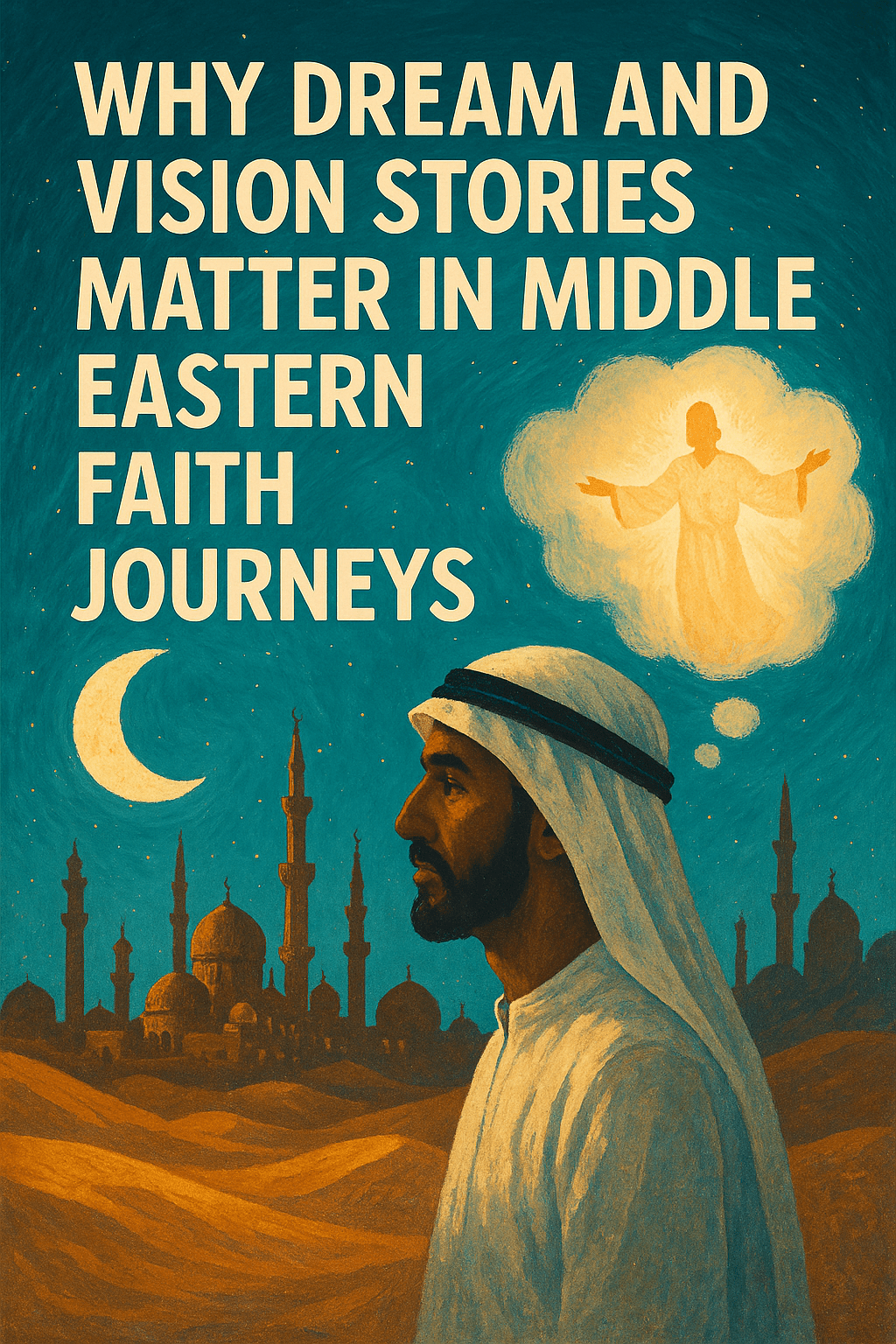
A man in white appeared, calling him by name. “I have seen your searching,” the man said, “and I will show you the way.” The dream repeated itself three times over three nights. Youssef, shaken but curious, began seeking people who might understand. That led him to a taxi driver who, by no coincidence, had once had a similar dream—and a New Testament in his glovebox.
Today, Youssef still lives in his hometown. His public persona hasn’t changed much. But in private, his faith has transformed entirely. In time, he has found subtle and wise ways to live out what he now believes, slowly shifting the spiritual atmosphere around him. He hasn’t run from culture. He’s been quietly reborn inside it.
Why These Stories Go Viral Here—Even When They’re Hidden
In a society where spiritual questions are often kept quiet, a dream gives permission to speak. When someone says, “I had a dream,” ears perk up. Why? Because in Islamic tradition, dreams are considered one of the last ways God still speaks directly. Especially true dreams—those that bring peace, clarity, or conviction.
When these accounts surface, they spread. Not on social media—at least not in the way you might expect—but through whispered phone calls, kitchen-table conversations, and coded text messages. They resonate because they validate what so many feel privately but cannot express publicly: that God is near, and He speaks, even still.
What This Means for the Future
Dreams and visions will continue to matter, not because they are sensational, but because they are safe spaces for truth to be revealed. They bypass gatekeepers. They ignore borders. They reach the heart without alerting the guards.
In a context where public shifts are dangerous, and private questions are sacred, dreams offer a middle ground—a sacred, secret encounter that catalyzes transformation. They open the door to Scripture, to community, and ultimately to the person of Jesus—often long before any preacher is involved.
A Word to the Curious
If you’ve never had such a dream, don’t envy those who have. Ask instead: what does God need to say to me in my language? For some, it will be Scripture. For others, a friend. For many here, it’s a dream. And perhaps that’s the mercy of God—who speaks not in one tone, but in many, not in one temple, but across every heart that longs for Him.
So next time you hear a story like Youssef’s, don’t file it away as “another dream testimony.” Pay attention. These aren’t exceptions. In many cases, they’re the rule.
Because here in the dust of this land, visions have always mattered.
They still do.
 The Basin and Towel