
A Hidden Kingdom: The Story of Fatima
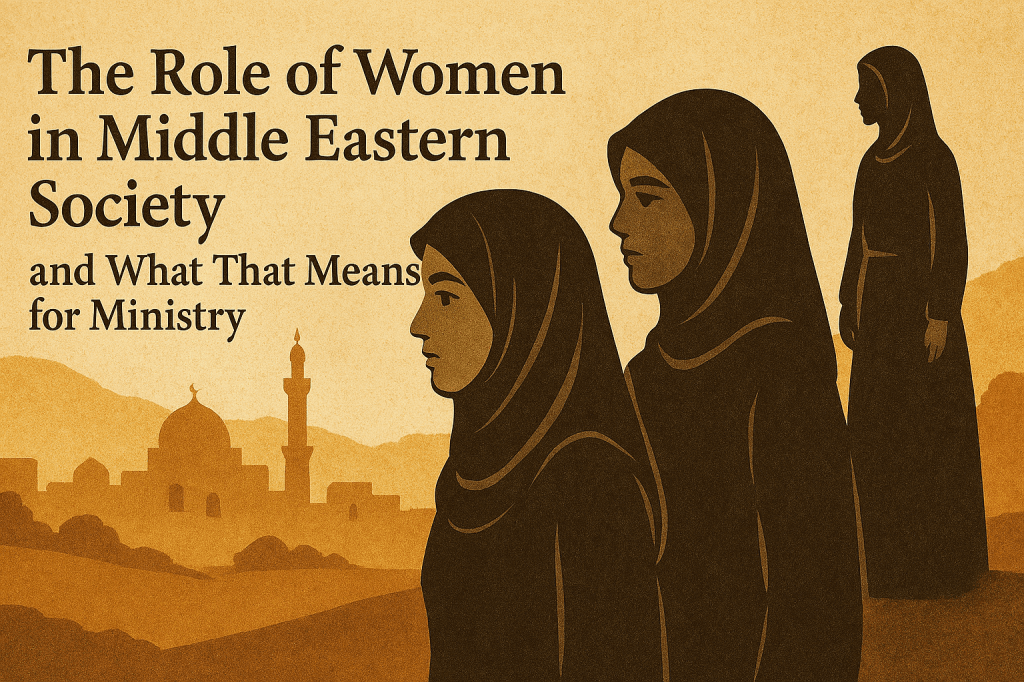
Most of the ministry happens in small groups. This is when I first met Fatima, she was sitting quietly in the corner of a crowded living room. The men, including her husband, were gathered in the center of the room, engaged in intense discussions. The women, veiled and reserved, busied themselves serving tea and listening in silence.
As I sipped my tea, I caught Fatima’s eye, and in that moment, I saw something deeper—a hunger for more, a curiosity that cultural restrictions had forced into silence. Over time Fatima began to ask questions. What started as small talk turned into an hour conversation about Jesus.
Fatima’s story represents the millions of Middle Eastern women whose lives are shaped by deeply ingrained cultural norms, but who are also central to the hidden, yet powerful, work of God’s kingdom. In fact, many of them men who are coming to faith in Christ in this part of the world, are believing because their wives had heard the gospel and believed. For Western missionaries, understanding the role of women in Middle Eastern society is essential for effective ministry.
Women: The Gatekeepers of the Home and Society
In many Middle Eastern cultures, women are often seen as the heart of the home. While their roles may appear limited to family life, their influence extends far beyond what meets the eye. Women shape values, pass down traditions, and quietly influence the next generation.
For missionaries, this means that reaching women is not an isolated effort—it is an entryway into entire families and communities. In a society where honor and reputation are paramount, a woman’s faith journey often begins in private. However, as she grows in her relationship with Christ, her transformation can impact her husband, children, and extended family in ways that men’s ministry often cannot.
The Challenges Women Face in Coming to Faith
Despite their hidden influence, Middle Eastern women face immense challenges when considering Christianity. Many are bound by strong patriarchal structures, where leaving Islam is not just a personal choice but a family crisis. A woman who expresses interest in Jesus risks rejection, social isolation, and even physical harm.
Additionally, limited literacy rates among women in some regions make Bible study and discipleship more difficult. This is why oral storytelling, relational evangelism, and hospitality-based ministry are key to reaching them. The home becomes the church, and conversations over tea become discipleship moments.
Western missionaries must be patient and sensitive to these realities, understanding that faith decisions are often slow and communal rather than immediate and individual. Transformation happens over time, through trust and consistency.
The Unique Strengths of Women in Ministry
While men in the Middle East often engage in public theological discussions, women’s ministry thrives in the private sphere—homes, kitchens, and courtyards. These seemingly ordinary spaces are where transformation happens. Women naturally create safe environments where trust is built, and the gospel can be shared in deep and meaningful ways.
Christian women, both local and foreign, have an unparalleled ability to connect through shared experiences of motherhood, marriage, and daily struggles. Female missionaries are often granted access to spaces that men cannot enter, making them invaluable in discipling Middle Eastern women.
Western missionaries must recognize that they are not bringing something new, but rather joining the work God is already doing. Humility, cultural understanding, and adaptability are essential.
How to Effectively Minister to Middle Eastern Women
- Build Genuine Relationships – Middle Eastern culture is deeply relational. Ministry must be slow, intentional, and based on trust. Invitations into homes, sharing meals, and simply listening go a long way in opening doors.
- Use Storytelling and Oral Methods – Since many women have not had formal religious education, stories—especially biblical narratives—are powerful tools for sharing truth. Parables, testimonies, and personal stories resonate deeply.
- Respect Cultural Boundaries While Living Out the Gospel Boldly – Many cultural practices surrounding women are tied to honor and modesty. Understanding these norms while also demonstrating the love and freedom found in Christ allows ministry to be both sensitive and transformative.
- Empower Women as Leaders in Their Own Contexts – While Western models of leadership might not always translate, local women who come to faith can become powerful disciplers within their own networks. Encouraging them to share their faith within their cultural framework leads to sustainable growth.
Fatima’s Journey: A Testament of Quiet Strength
After months of friendship and countless cups of tea, Fatima made a quiet yet life-altering decision—she gave her life to Jesus. She didn’t announce it publicly, nor did she leave her home. Instead, she began discipling her children, subtly sharing the truths of Christ through stories and songs. Over time, her husband noticed a change, and through her unwavering faith, he too became open to the gospel.
Fatima’s journey is a reminder that God is at work in places unseen. While ministry to Middle Eastern women may look different from traditional Western approaches, it is a vital part of the kingdom’s expansion. Women are not just recipients of ministry—they are co-laborers in Christ’s mission.
For Western missionaries, the challenge is not to impose their own methods but to learn, adapt, and humbly walk alongside Middle Eastern women in their faith journeys. The question is, will we recognize their hidden strength and step into the unique opportunities God has given us to reach them?
1. Why Learning Arabic (Even Just a Little) Changes Everything
The Taxi Driver Who Changed a Missionary’s Perspective
A young missionary named James was running late for a meeting in Amman, Jordan. He hopped into a taxi and, out of habit, greeted the driver in Arabic: “As-salamu alaykum!” The driver’s eyes lit up. “Wa alaykum as-salam!” he replied warmly, shifting from the distant politeness he usually displayed with foreigners into a full-blown conversation.
James struggled through his Arabic, and the driver graciously encouraged him. As James fumbled with his vocabulary, the driver smiled and said, “You care about us. You learn our language.” At the end of the ride, he refused James’ money. “You are my brother,” he said.
That moment changed everything for James. He realized that even his broken Arabic was a bridge. It wasn’t about fluency; it was about connection.
1. Arabic Breaks Down Walls of Distrust
In many parts of the Middle East, Westerners are viewed with suspicion. Are you a tourist? A spy? A foreigner who just wants to take and not give? But the moment you speak a little Arabic, those walls start to crumble.
Speaking even basic Arabic tells people you respect their culture. It’s a way of saying, “I see you. I value you.” And in a region where honor and hospitality are everything, that message is powerful.
As a missionary, you must understand that trust is earned slowly. Language is one of the quickest ways to show that you are not just passing through but are willing to walk alongside people in their world.
2. It Opens Doors to Relationships
James once met a shopkeeper in Cairo who, upon hearing him attempt Arabic, insisted he join him for tea. Over the next hour, the shopkeeper shared about his life, his family, and his dreams. Would that have happened if James had just stuck to English? No way.
In the Middle East, relationships are everything. Ministry here is not about quick evangelism; it is about deep, personal connections that often take years to build. When you try to speak Arabic, even if it’s just greetings and basic phrases, people open up in ways they wouldn’t otherwise. It’s like unlocking a secret door to deeper conversations, friendships, and even gospel opportunities.
3. It Protects You from Being an Outsider
When you don’t understand Arabic, you miss out on more than just conversations. You miss context. You miss jokes. You miss warnings. And sometimes, you miss danger.
In a region where misunderstandings can have big consequences, knowing a little Arabic helps you navigate daily life with confidence. You can understand what’s happening around you, whether in a marketplace, a taxi, or a negotiation. You become an insider—not just another clueless foreigner.
If you want to stay safe, avoid cultural pitfalls, and show genuine care, learning Arabic is non-negotiable.
4. It Shows the Love of Christ in a Tangible Way
Jesus met people where they were. He spoke their language, walked their streets, and understood their struggles. As His followers, we are called to do the same.
When you learn Arabic, even at a beginner level, you embody Christ’s love in a practical way. It shows humility, patience, and a willingness to enter into another’s world. And often, it earns you the right to be heard when you share the good news of Jesus.
In the Middle East, actions speak louder than words. Learning Arabic is an action that tells people, “I love you enough to learn your world.” That testimony is powerful.
5. It’s Easier Than You Think
A lot of people avoid Arabic because it seems hard. Yes, the script is different. Yes, the sounds are unfamiliar. But Arabic is surprisingly logical, and you don’t have to be fluent to make a difference.
Start small. Learn greetings, basic questions, and key phrases. Even 10 minutes a day can lead to significant progress over time.
Remember, perfection is not the goal—relationship is. People don’t care if you make mistakes; they care that you are trying.
Final Thought: Prepare Your Heart and Mind
If you’re serious about missions, relationships, and ministering effectively in the Middle East, start learning Arabic today. Even just a little changes everything.
So here’s a challenge: Learn five new Arabic phrases this week. Use them. Watch what happens. You might be surprised at the doors God opens.
Your mission here isn’t just about preaching—it’s about presence. And presence begins with language.
 The Basin and Towel